1 year ago


Posted 1 year ago 955 views 5 mins read
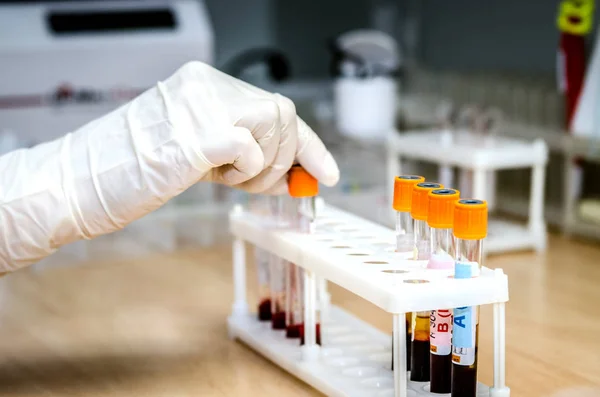
In a landmark breakthrough, scientists have officially identified a new human blood group system named MAL, marking a significant advancement in transfusion medicine and genetic understanding. The discovery published in the journal Blood resolves a 50-year-old medical mystery and adds to the complexity of how we classify blood types beyond the commonly known ABO and Rh systems.
Every few years, science gives us a jaw-dropper. Here’s one: a new human blood group has just been discovered. Not a variant, not a rare subtype an entirely new blood system. It’s called MAL, and it’s the first time in decades that a discovery like this has hit the books.And here's the kicker it helps solve a medical mystery that has haunted doctors since 1972.This isn’t just fascinating science. It’s a breakthrough that could literally save lives in hospitals, especially during high-risk transfusions. So let’s break it down, human-style. No fluff, no jargon just solid, actionable insight into what this means and why it matters to you, your patients, or your loved ones.

We’ve all heard about ABO and Rh (positive or negative). But those are just the tip of the iceberg. Beneath that surface, there are more than 360 known antigens in our blood, grouped into systems that help doctors match donors with patients during transfusions.The problem? Most people (and even some healthcare systems) never test beyond the basics. But for some patients especially those needing frequent transfusions or with rare genetics these “minor” systems become major threats.That’s why discovering a new blood group system like MAL is such a game-changer.

In the early '70s, a pregnant woman had a severe transfusion reaction. Her blood sample showed something strange she was missing a molecule found in nearly everyone else’s red blood cells.That molecule was labeled AnWj. For years, scientists saw it pop up in rare cases, mostly involving risky transfusions and pregnancy complications. But no one could pin down where it came from or why it mattered.
Until now.
Fast forward to 2024. A team from the UK’s NHS Blood and Transplant and the University of Bristol cracked the code. They discovered that the mysterious AnWj antigen is carried on a protein called Mal, produced by the MAL gene.

If you inherit a faulty MAL gene from both parents (a homozygous deletion), your red blood cells don’t produce the Mal protein. That means you’re MAL-negative and missing the AnWj antigen entirely.This is what caused that woman’s reaction in 1972. She received blood that had AnWj, but her body saw it as a foreign invader and attacked it.
Now that we can identify MAL-negative individuals, we can screen them in advance and avoid giving them blood that contains the AnWj antigen.
That might sound niche, but it’s huge for anyone:
• Receiving frequent transfusions (think sickle cell or thalassemia patients)
With rare blood types
• From ethnically underrepresented donor groups
• Or with unexplained transfusion reactions in the past
Actionable tip for healthcare providers: Start requesting extended genotyping for patients with unclear transfusion histories or unexplained hemolytic reactions. The new MAL test can save your patient from unnecessary risk.

If you’re involved in donor management, here’s your takeaway:
Diversify your donor base.
Why? Rare blood types like MAL-negative are more common in certain ethnic backgrounds. If your donor pool isn’t diverse, your ability to serve every patient fairly and safely is at risk.
Start screening for the MAL blood group in high-risk populations and build a database of donors who are MAL-negative. You don’t need thousands just a reliable few can be life-saving.
Yes, this is a molecular discovery. But let’s not lose sight of the human side.
Someone, somewhere, will need a transfusion tomorrow. And if they’re one of the few people in the world who are MAL-negative, the availability of this knowledge and a match might be the difference between life and death.
That’s the real power of this discovery.
The MAL system is now officially recognized by the International Society of Blood Transfusion. That means:
• It will be included in future genotyping kits.
Medical databases will begin to flag MAL-related compatibility.
• Blood services will integrate MAL screening into their long-term planning.
But this is also a wake-up call. There may be more undiscovered blood types out there. We’ve only scratched the surface.
In a world moving toward personalized healthcare, this is what progress looks like. The MAL blood group adds another layer to our understanding of human biology and pushes us closer to true precision medicine.It also reminds us that every drop of blood tells a story. Some stories, like this one, take 50 years to unfold.So the next time you hear “blood type,” remember there’s more to it than A, B, AB, or O. Much more.


Leading the way in health excellence through innovation, expertise, care and support.