
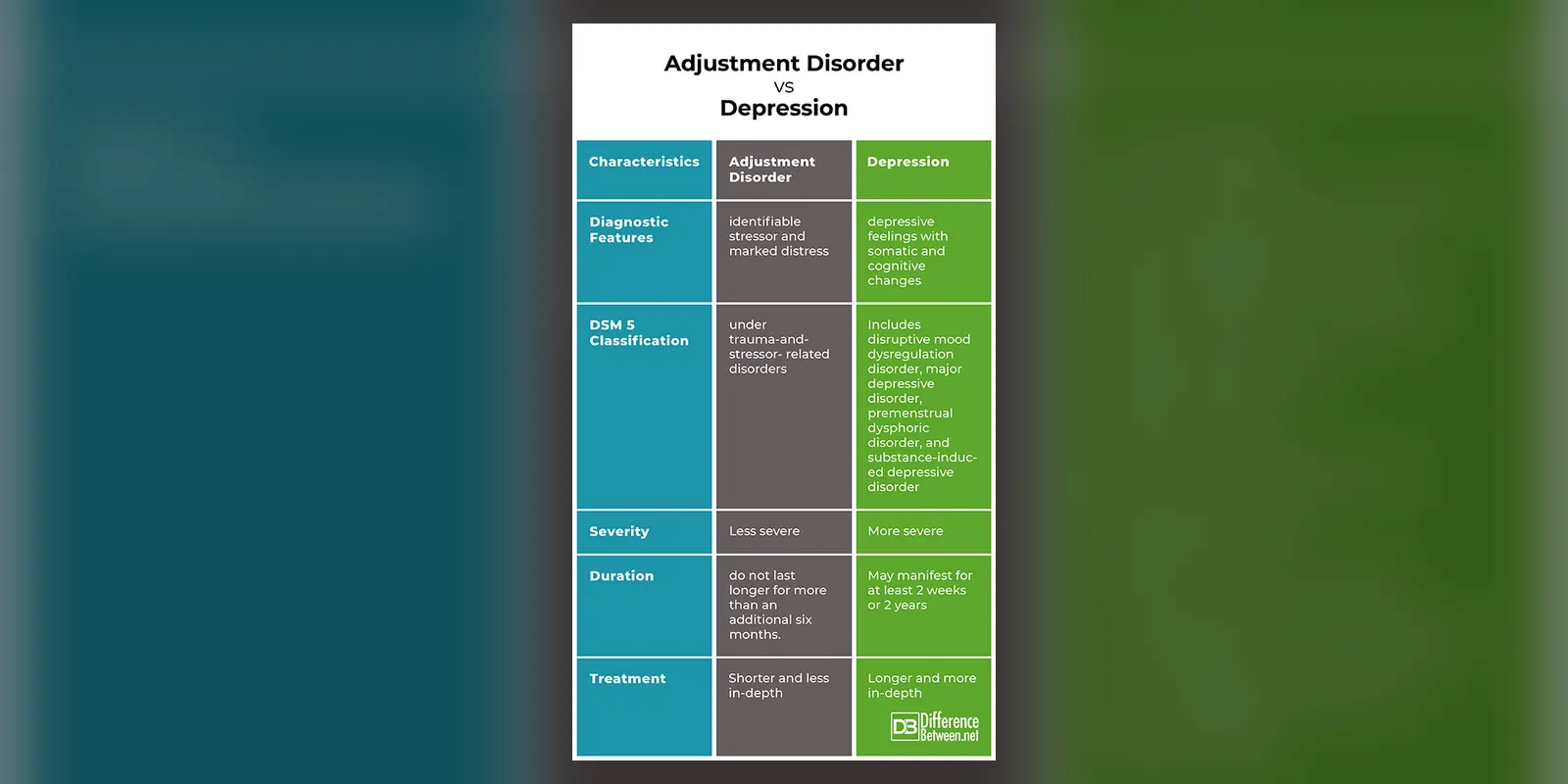
Overview
Adjustment disorder is a mental health condition in which a person has a stronger or longer-lasting emotional or behavioural reaction to a stressful life event than would usually be expected. The stressor might be a relationship breakdown, job loss, illness, moving home, bereavement, financial problems or a major life change. The reaction causes significant distress or makes it hard to cope with work, school, relationships or daily tasks.
Symptoms usually begin within one to three months of the stressful event and often include low mood, anxiety, worry, tearfulness, difficulty sleeping and feeling unable to cope. Some people, especially teenagers, show changes in behaviour such as acting out, reckless behaviour or withdrawing from others.
Adjustment disorder is common and often short-lived. It typically improves within six months once the stressor ends or the person adapts to it. Talking therapies and practical support are the main treatments. It is important not to dismiss it as "just stress", because adjustment disorder can be associated with an increased risk of self-harm and suicidal thoughts, and it can sometimes develop into depression or anxiety disorders.
When to get urgent help
Seek urgent help immediately, by calling emergency services or a crisis line, if you:
- Have thoughts of ending your life or harming yourself
- Have made plans to harm yourself
- Feel unable to keep yourself safe
- Are hearing voices or seeing things others do not
Causes and risk factors
Adjustment disorder is triggered by an identifiable stressful event or change, such as:
- Relationship breakdown, divorce or separation
- Loss of a job, retirement or problems at work
- Financial difficulties or debt
- Serious illness or injury in oneself or a loved one
- Moving home, starting a new school or migration
- Bereavement (when the reaction exceeds normal grief)
- Becoming a parent or caring for a relative
- Legal problems
- Natural disasters, accidents or exposure to violence (when not severe enough to cause post-traumatic stress disorder)
Factors that make someone more vulnerable include:
- Previous mental health problems
- Difficult childhood experiences
- Limited social support
- Several stressors at the same time
- Ongoing life difficulties such as poverty or discrimination
- Certain personality traits and coping styles
How it develops (pathophysiology)
Normal stress response and adaptation
When we face a challenge or threat, the body and brain mount a stress response designed to help us cope. This involves two main systems:
- The sympathetic nervous system, which within seconds releases adrenaline and noradrenaline, increasing heart rate, alertness and energy (the "fight or flight" response).
- The hypothalamic-pituitary-adrenal (HPA) axis, which over minutes to hours increases cortisol production. The hypothalamus releases corticotropin-releasing hormone (CRH), the pituitary releases ACTH, and the adrenal glands release cortisol, which mobilises energy, modulates the immune system and influences mood and memory.
Key brain regions involved include:
- The amygdala, which detects threats and generates emotional responses such as fear
- The hippocampus, which places experiences in context and helps switch off the stress response through feedback on the HPA axis
- The prefrontal cortex, which plans, regulates emotions and reappraises situations, dampening amygdala activity
In healthy adaptation, after the initial distress, the stress response settles. The prefrontal cortex helps reinterpret the situation, the person uses coping strategies and social support, and the body returns to balance. This flexible ability to recover is called resilience.
What goes wrong
In adjustment disorder, the normal process of adaptation is disrupted. Rather than a single biological abnormality, the condition arises from an interaction between the stressor, the person's vulnerabilities and their environment:
- Overwhelming or uncontrollable stress. When stressors are severe, ongoing, unpredictable or multiple, the demands exceed a person's coping resources.
- Persistent activation of stress systems. Instead of settling, the HPA axis and sympathetic system may stay activated, keeping cortisol and adrenaline levels raised. Prolonged high cortisol can affect sleep, appetite, mood and concentration.
- Changes in emotional regulation circuits. Stress increases amygdala reactivity while reducing the regulating influence of the prefrontal cortex. This makes it harder to manage emotions, leading to heightened worry, tearfulness and irritability.
- Preoccupation and rumination. A core psychological feature is preoccupation with the stressor: excessive worry, recurrent distressing thoughts and constant thinking about its consequences. Rumination keeps the stress response active.
- Failure to adapt. People may struggle to accept the change, find new routines or solve problems, leading to a sense of being stuck and unable to cope.
Psychological models suggest adjustment disorder lies on a spectrum of stress-response syndromes, alongside acute stress reactions and post-traumatic stress disorder. Unlike PTSD, the triggering event does not need to be life-threatening, and the main symptoms are preoccupation and failure to adapt rather than flashbacks and hyperarousal related to trauma.
Vulnerability is influenced by:
- Genetic factors affecting stress sensitivity and mood regulation
- Early life adversity, which can alter the sensitivity of the HPA axis and emotional circuits
- Personality and coping styles, such as avoidance or perfectionism
- Social factors, including isolation, lack of support or ongoing hardship
How the condition develops
- A stressful event or change occurs.
- The person experiences an understandable initial reaction, such as shock, sadness or worry.
- Instead of gradually settling, symptoms persist or intensify, usually within one to three months of the stressor.
- Preoccupation with the stressor dominates thinking, and coping becomes difficult.
- Daily functioning at work, school, home or in relationships is affected.
- In most cases, symptoms improve once the stressor ends or the person adapts, usually within six months.
- In some, particularly with ongoing stress or vulnerability, symptoms persist or evolve into major depression, anxiety disorders or substance misuse.
Why the symptoms happen
- Low mood, tearfulness and hopelessness reflect the emotional impact of loss or change and altered activity in mood-regulating circuits.
- Anxiety, worry and nervousness arise from heightened amygdala activity and anticipation of negative consequences.
- Difficulty sleeping is caused by ongoing arousal, rumination and changes in cortisol rhythm.
- Poor concentration and memory result from stress hormones affecting the prefrontal cortex and hippocampus, and from mental preoccupation.
- Irritability and anger reflect reduced emotional control under stress.
- Physical symptoms such as headaches, stomach upset, palpitations and tiredness are caused by sympathetic activation and muscle tension.
- Behavioural changes, such as withdrawal, missing work or school, reckless driving, fighting or increased alcohol use, are attempts to escape or cope with distress, especially in young people.
How complications develop
Persistent distress, hopelessness and impulsive behaviour increase the risk of self-harm and suicidal thoughts, which can occur even when symptoms seem mild. Ongoing stress may lead to depression or anxiety disorders. People may use alcohol or drugs to cope, increasing the risk of dependence. Difficulties at work or school can lead to job loss or academic problems, which can become new stressors.
How treatment acts on the mechanism
- Supportive counselling provides a space to express emotions, reduces isolation and helps the person feel understood, which can lower stress arousal.
- Problem-solving therapy helps break overwhelming difficulties into manageable steps, restoring a sense of control.
- Cognitive behavioural therapy (CBT) targets unhelpful thinking patterns and rumination, improves coping skills and strengthens prefrontal regulation of emotions.
- Stress management and relaxation techniques, such as breathing exercises and mindfulness, reduce sympathetic activation.
- Practical support, such as help with finances, housing or work adjustments, reduces the stressor itself.
- Short-term medicines may treat specific symptoms such as severe sleep problems or anxiety, but are not the main treatment.
Types
Adjustment disorder is often described by its main symptoms:
- With depressed mood
- With anxiety
- With mixed anxiety and depressed mood
- With disturbance of conduct (behavioural problems)
- With mixed disturbance of emotions and conduct
- Unspecified
It can also be described as acute (lasting less than six months) or persistent (chronic) (lasting longer, usually because the stressor continues).
Signs and symptoms
- Feeling sad, hopeless or tearful
- Feeling anxious, worried, nervous or overwhelmed
- Constantly thinking about the stressful event
- Difficulty sleeping
- Poor concentration
- Irritability or anger
- Loss of enjoyment
- Withdrawing from friends and family
- Difficulty coping with daily tasks, work or school
- Physical symptoms such as headaches, stomach upset or palpitations
- Reckless or risky behaviour, especially in teenagers
- Thoughts of self-harm or suicide in some people
How it is diagnosed
- Assessment by a GP or mental health professional, discussing symptoms, their timing and the stressful event
- Confirming that symptoms began within about three months of the stressor and are more severe or prolonged than expected, or significantly affect daily life
- Excluding other conditions, such as depression, generalised anxiety disorder or PTSD
- Questionnaires may help assess severity
- Risk assessment for self-harm and suicide
- Physical health checks if symptoms might have a physical cause
Possible complications
- Self-harm and suicidal thoughts or behaviour
- Development of depression or anxiety disorders
- Alcohol or drug misuse
- Problems at work, school or in relationships
- Persistent (chronic) adjustment disorder if stress continues
Goals of treatment
The goals are to reduce distress, help the person adapt to the change, improve coping skills, restore daily functioning, ensure safety and prevent progression to other mental health conditions.
Medicines
Medicines are not usually the first treatment. Short-term use may be considered for specific symptoms:
- Short courses of sleep medicines for severe insomnia, used cautiously
- Antidepressants if symptoms develop into depression or anxiety disorders
- Benzodiazepines are generally avoided because of dependence risk
Other treatments
- Supportive counselling
- Cognitive behavioural therapy (CBT)
- Problem-solving therapy
- Brief psychodynamic or interpersonal therapy
- Family or couples therapy where relationships are involved
- Guided self-help and online programmes
- Practical help with employment, finances or housing
- Support groups
Living with it and prevention
- Talk to trusted friends or family about how you feel
- Keep a regular routine for sleep, meals and activity
- Exercise regularly
- Limit alcohol and avoid drugs
- Break problems down into small steps
- Practise relaxation techniques such as slow breathing or mindfulness
- Seek help early if you are struggling to cope after a major change
Monitoring and follow-up
A follow-up appointment is usually arranged to check progress. If symptoms persist beyond six months, worsen, or develop into depression or anxiety, treatment is reviewed and specialist support may be offered. Risk of self-harm is reassessed regularly.
Outlook
Most people recover within six months, especially once the stressor resolves or they adapt to it. Support and therapy can speed recovery. A minority develop longer-term mental health problems, particularly if stress continues.
Special considerations
- Children and teenagers often show behavioural changes, such as tantrums, school refusal or risk-taking, rather than describing feelings
- Older adults may experience adjustment disorder after retirement, illness or bereavement, and symptoms may be mistaken for physical illness
- People with serious physical illness commonly experience adjustment disorder after diagnosis; psychological support is part of good care
- Refugees and migrants may face multiple stressors and need culturally sensitive support