
Overview
Age-related hearing loss, also called presbycusis, is the gradual loss of hearing that occurs as people get older. It usually affects both ears equally and starts with high-pitched sounds, such as birdsong, children's voices and consonants like "s", "f" and "th". People often notice that they can hear others speaking but cannot understand the words clearly, especially in noisy places.
It is extremely common: about a third of people over 65 and most people over 75 have some degree of hearing loss. Because it develops slowly, many people do not realise their hearing has changed, and family members often notice first.
Age-related hearing loss cannot be reversed, but it can be managed very effectively with hearing aids, communication strategies and, in more severe cases, cochlear implants. Treating hearing loss is important because untreated hearing loss is linked with social isolation, depression, falls and an increased risk of dementia.
When to get urgent help
Seek urgent medical care if you have:
- Sudden hearing loss in one or both ears, which needs assessment within days and may be treatable
- Hearing loss with dizziness, severe headache, facial weakness or ear pain and discharge
- Hearing loss in one ear only
Causes and risk factors
Age-related hearing loss results from the combined effects of ageing and a lifetime of exposures. Contributing factors include:
- Ageing of the inner ear and hearing nerve
- Genetics: hearing loss often runs in families
- Noise exposure over a lifetime, from work, music, firearms or machinery
- Cardiovascular risk factors: high blood pressure, diabetes, smoking and high cholesterol, which affect blood flow to the inner ear
- Ototoxic medicines, such as certain antibiotics (aminoglycosides), some chemotherapy drugs (cisplatin) and high-dose loop diuretics
- Previous ear infections or ear disease
- Male sex, possibly due to more noise exposure
How it develops (pathophysiology)
Normal hearing
Hearing involves converting sound waves into nerve signals that the brain can interpret:
- Outer ear: the pinna and ear canal collect sound waves and direct them to the eardrum.
- Middle ear: the eardrum vibrates, and three tiny bones (malleus, incus and stapes) amplify the vibrations and transmit them to the oval window of the inner ear.
- Inner ear: the cochlea, a snail-shaped, fluid-filled structure, converts vibrations into nerve signals.
Inside the cochlea runs the basilar membrane, which is stiff and narrow at the base (near the oval window) and wider and more flexible at the apex. Different frequencies make different parts vibrate: high-pitched sounds stimulate the base, and low-pitched sounds stimulate the apex. This arrangement, called tonotopic organisation, allows the brain to separate pitches.
Sitting on the basilar membrane is the organ of Corti, which contains sensory hair cells:
- About 3,500 inner hair cells in a single row, which convert vibration into nerve signals and send them to the brain through the auditory nerve
- About 12,000 outer hair cells in three rows, which act as amplifiers. They change length in response to sound (electromotility, driven by a protein called prestin), boosting quiet sounds and sharpening frequency tuning
Each hair cell has a bundle of tiny projections (stereocilia). When sound moves the basilar membrane, the stereocilia bend, opening ion channels. Potassium-rich fluid called endolymph flows into the cell, generating an electrical signal. The stria vascularis, a specialised tissue in the cochlear wall rich in blood vessels, pumps potassium into the endolymph to maintain a high electrical potential (the endocochlear potential, about +80 millivolts), which acts like a battery powering the hair cells.
Inner hair cells release the neurotransmitter glutamate onto fibres of the spiral ganglion neurons, which form the auditory nerve and carry signals to the brainstem and then to the auditory cortex, where sound is interpreted.
Humans are born with a fixed number of hair cells; they do not regenerate once lost.
What goes wrong
Age-related hearing loss reflects damage to several parts of this system, often in combination:
1. Sensory (hair cell) loss. Outer hair cells are especially vulnerable. Over a lifetime, they are damaged by noise, oxidative stress, ototoxic substances and age-related decline. Damage begins at the base of the cochlea, the high-frequency region, which receives the greatest mechanical stress from all incoming sounds and has cells that are more susceptible to oxidative damage. Loss of outer hair cells reduces amplification and frequency sharpness.
2. Metabolic (strial) changes. With age, the stria vascularis thins and its blood supply declines. Its pumping capacity falls, lowering the endocochlear potential. This weakens the "battery" for all hair cells, causing a flatter hearing loss across frequencies. Cardiovascular risk factors that impair small blood vessels can accelerate this.
3. Neural loss. Spiral ganglion neurons and their connections (synapses) to inner hair cells are lost with age and after noise exposure, even when hair cells survive. This is sometimes called cochlear synaptopathy or "hidden hearing loss". It may not show up much on standard hearing tests but reduces the clarity of signals, making speech harder to understand in noise.
4. Central auditory changes. The brain's auditory pathways also age. Processing speed slows, the ability to separate sounds from background noise declines, and temporal processing (detecting rapid changes in sound) becomes less precise. Reduced input from the ear can cause the brain's auditory areas to reorganise.
At a molecular level, contributing processes include:
- Oxidative stress from reactive oxygen species generated during metabolism and noise exposure
- Mitochondrial DNA damage, reducing energy production in hair cells and neurons
- Apoptosis (programmed cell death) of hair cells and neurons
- Genetic variants affecting antioxidant defences, hair cell structure and stria function
Why the symptoms happen
- Difficulty hearing high-pitched sounds reflects early damage at the cochlear base.
- Hearing speech but not understanding it occurs because consonants, which carry most of the information in speech, are high-pitched and quiet, while vowels, which carry the loudness, are lower-pitched and better preserved. People hear the sound of speech but miss the detail.
- Difficulty in noisy environments results from loss of outer hair cell sharpening, neural loss and slower central processing, making it hard to separate speech from background noise.
- Thinking others are mumbling reflects loss of clarity rather than loudness.
- Tinnitus (ringing or buzzing) arises when reduced input from damaged parts of the cochlea leads the brain's auditory pathways to increase their sensitivity, generating phantom sounds.
- Sensitivity to loud sounds (recruitment) occurs because, with fewer working hair cells and outer hair cell amplification lost, loudness grows abnormally fast once a sound exceeds the hearing threshold.
- Listening fatigue results from the extra effort needed to understand speech.
How complications develop
Hearing loss reduces participation in conversations and social activities, leading to social isolation, loneliness and depression. It increases cognitive load, as the brain diverts resources from memory and thinking to decode sound. Reduced auditory input may contribute to changes in brain structure. These factors are thought to explain why untreated hearing loss is one of the largest potentially modifiable risk factors for dementia. Hearing loss is also linked to falls, possibly because of reduced awareness of surroundings, shared inner ear ageing affecting balance, and increased cognitive load. Safety risks arise from not hearing alarms, traffic or warnings.
How treatment acts on the mechanism
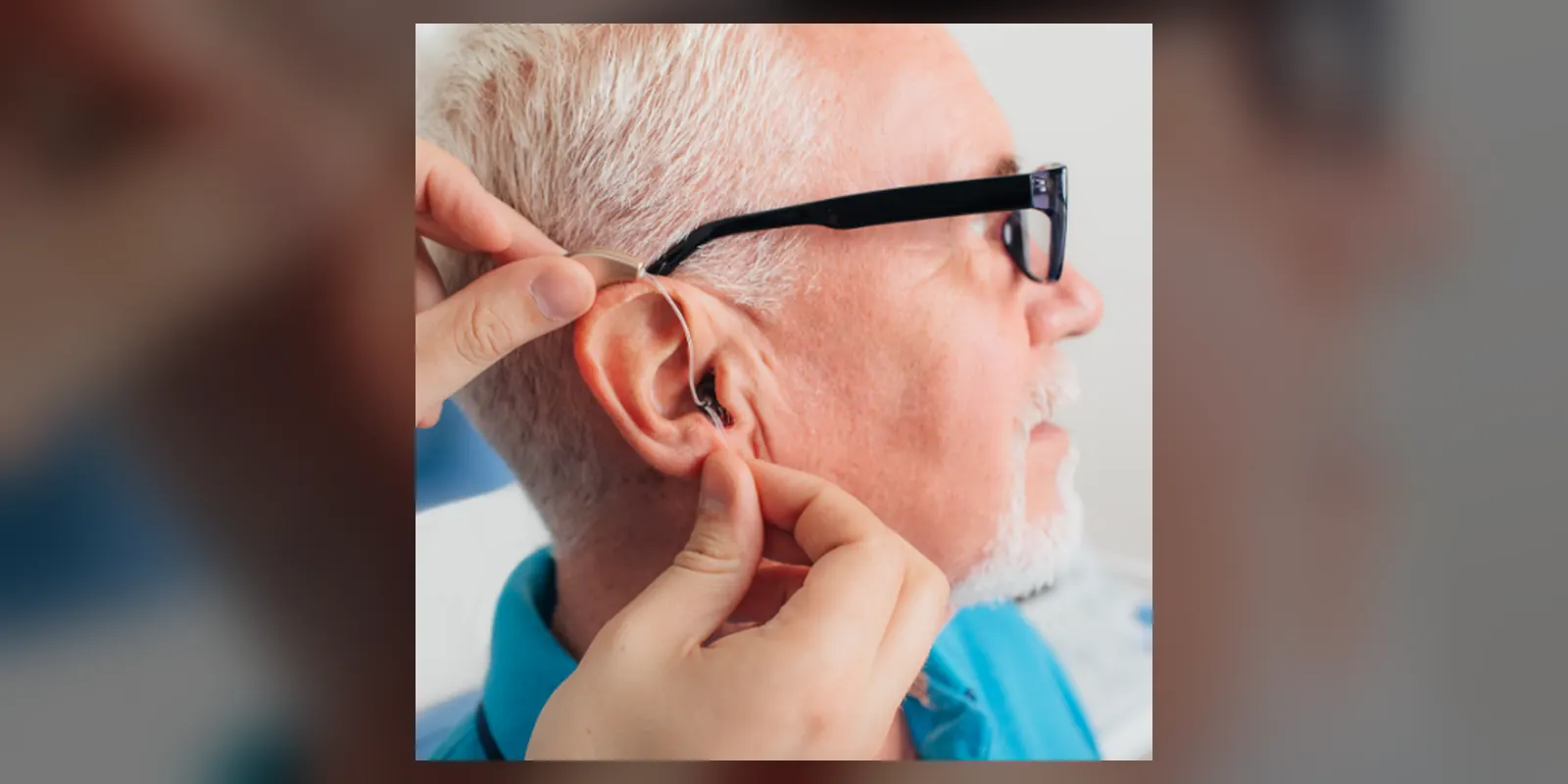
- Hearing aids amplify sounds, especially in the frequencies that are lost, compensating for reduced outer hair cell amplification. Modern digital aids compress sounds to avoid discomfort from recruitment and use directional microphones and noise reduction to improve speech in noise.
- Assistive listening devices, such as TV streamers and remote microphones, improve the signal-to-noise ratio.
- Cochlear implants bypass damaged hair cells by directly stimulating the auditory nerve with electrical signals through electrodes placed in the cochlea. They are used when hearing aids no longer provide enough benefit, provided the auditory nerve still works.
- Auditory training and communication strategies help the brain make better use of available sound and visual cues.
- Tinnitus management using sound therapy and counselling reduces the brain's focus on phantom sounds.
- Protecting remaining hearing by avoiding loud noise and ototoxic medicines slows further damage.
Types
Age-related hearing loss is sometimes classified by the main site of damage:
- Sensory: loss of hair cells, causing steeply sloping high-frequency loss
- Neural: loss of nerve fibres, causing poor speech understanding
- Metabolic (strial): atrophy of the stria vascularis, causing flatter loss across frequencies
- Mixed: combinations, which are most common
It is also graded by severity: mild, moderate, moderately severe, severe and profound.
Signs and symptoms
- Difficulty hearing high-pitched sounds, such as doorbells, birdsong or children's voices
- Hearing speech but finding it unclear
- Difficulty following conversations in noisy places, such as restaurants or gatherings
- Asking people to repeat themselves
- Thinking others are mumbling
- Turning up the television or radio louder than others like
- Difficulty hearing on the phone
- Ringing, buzzing or hissing in the ears (tinnitus)
- Feeling tired after social events from the effort of listening
- Withdrawing from conversations
How it is diagnosed
- Ear examination to check for earwax, infection or eardrum problems
- Pure-tone audiometry: a hearing test that measures the quietest sounds heard at different pitches; typically shows a sloping high-frequency loss in both ears
- Speech audiometry: tests understanding of words
- Tympanometry: checks middle ear function
- Questionnaires about hearing difficulties
- MRI scan if hearing loss is uneven between the ears or sudden, to exclude other causes such as an acoustic neuroma
Possible complications
- Social isolation and loneliness
- Depression and anxiety
- Increased risk of cognitive decline and dementia
- Falls
- Safety risks from not hearing alarms or warnings
- Strain on relationships
- Reduced independence
Goals of treatment
The goals are to improve communication and quality of life, reduce the effects of hearing loss on mental health and cognition, and protect remaining hearing.
Medicines
There are no medicines that reverse age-related hearing loss. Medicines may be reviewed to avoid ototoxic drugs where possible, and cardiovascular risk factors can be treated to protect blood flow to the ear.
Other treatments
- Hearing aids, fitted and adjusted by an audiologist
- Over-the-counter hearing aids for mild to moderate loss in some countries
- Assistive listening devices, such as amplified phones, TV listeners and captioned telephones
- Cochlear implants for severe to profound loss when hearing aids are not enough
- Bone conduction or middle ear implants in some cases
- Auditory rehabilitation and communication training
- Lip-reading classes
- Tinnitus management
Living with it and prevention
- Protect your ears from loud noise with earplugs or ear defenders
- Keep personal music volumes moderate and take listening breaks
- Do not smoke, and manage blood pressure, diabetes and cholesterol
- Have regular hearing checks, especially after age 50 or if you notice changes
- Wear hearing aids consistently once prescribed, so the brain adapts
Communication tips for family and friends:
- Face the person when speaking
- Speak clearly at a normal pace without shouting
- Reduce background noise
- Rephrase rather than repeat if not understood
Monitoring and follow-up
Hearing is usually rechecked every one to three years, or sooner if there are changes. Hearing aids need regular adjustment, cleaning and battery or charging care. Audiologists review benefit and fit.
Outlook
Age-related hearing loss gradually worsens over time, but with hearing aids and other support, most people can communicate effectively and maintain an active social life.
Special considerations
- People with dementia: correcting hearing loss can improve communication and reduce distress
- Care home residents: hearing aids should be maintained and used daily
- People with visual impairment: combined sensory loss needs specialist support
- Workers exposed to noise: hearing conservation programmes reduce later hearing loss