
Overview
Alzheimer's disease is a progressive brain condition that slowly damages memory, thinking, language and behaviour. It is the most common cause of dementia, accounting for 60 to 70 percent of cases. It usually begins after age 65, although a smaller number of people develop it earlier (young-onset Alzheimer's disease).
The earliest sign is usually difficulty remembering recent events or new information. Over years, problems spread to other abilities such as finding words, planning, judging distances and managing everyday tasks, until the person needs help with all aspects of daily living. There is no cure, but treatments can help with symptoms, newer medicines may slow early disease in selected people, and good support helps people live well for as long as possible.
When to get urgent help
Seek urgent help for sudden confusion or a sudden change in behaviour (which may be delirium), a fall with injury, signs of stroke, or if the person is at risk of harm.
Causes and risk factors
The exact cause is not fully understood. Risk factors include:
- Age: the strongest risk factor; risk doubles about every five years after 65
- Genetics: the APOE e4 gene variant increases risk; rare inherited mutations in APP, PSEN1 and PSEN2 cause early-onset familial forms
- Down syndrome, because of an extra copy of the APP gene on chromosome 21
- Cardiovascular risk factors: high blood pressure, diabetes, high cholesterol, obesity and smoking in mid-life
- Physical inactivity and social isolation
- Hearing loss that is not treated
- Head injury
- Depression
- Low educational attainment
- Air pollution and excess alcohol
How it develops (pathophysiology)
Normal brain function
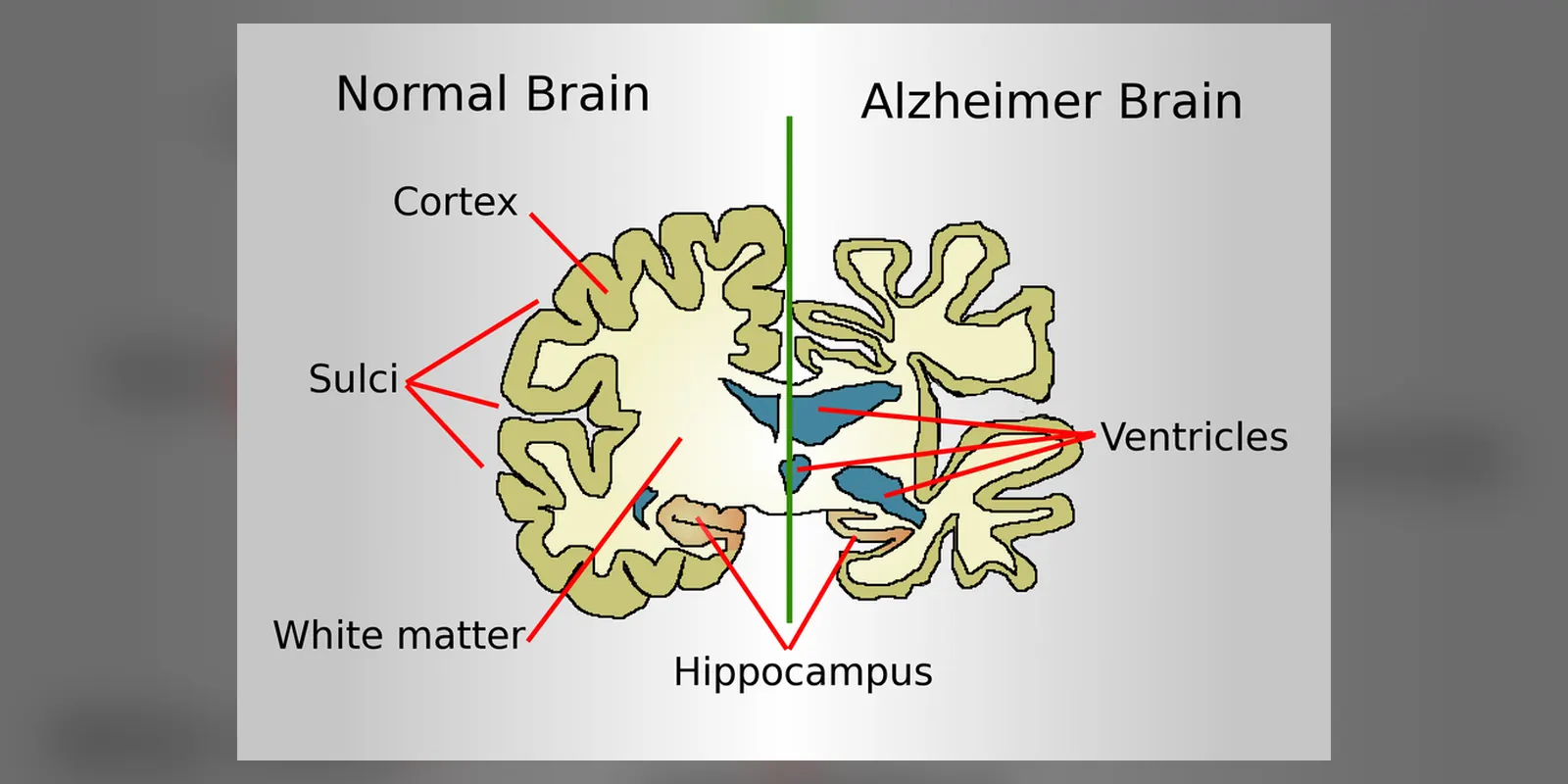
Memory and thinking depend on billions of nerve cells (neurons) connected through synapses. The hippocampus, deep in the temporal lobe, is essential for forming new memories, while the cerebral cortex handles language, reasoning and planning. Neurons communicate using chemical messengers, including acetylcholine, which is important for attention and memory. Support cells called microglia and astrocytes clear waste and maintain a healthy environment.
What goes wrong
Alzheimer's disease is defined by two abnormal protein deposits:
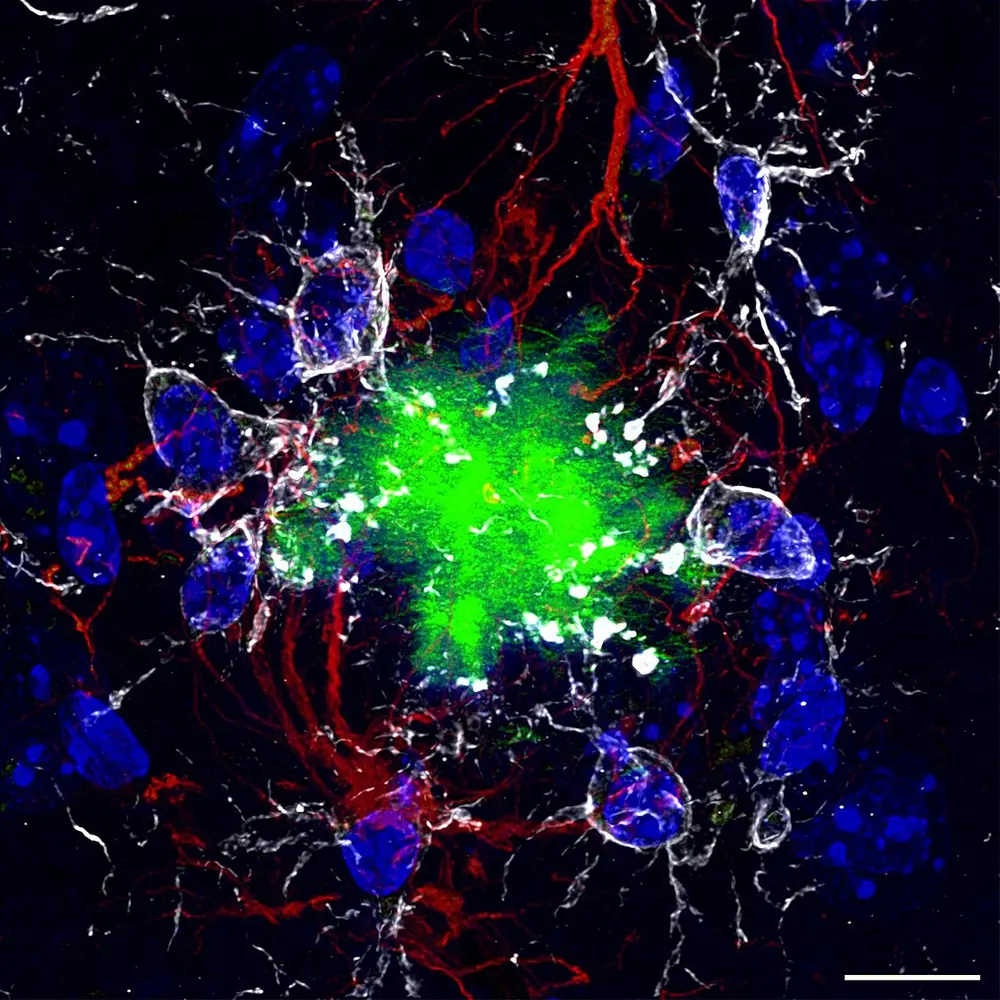
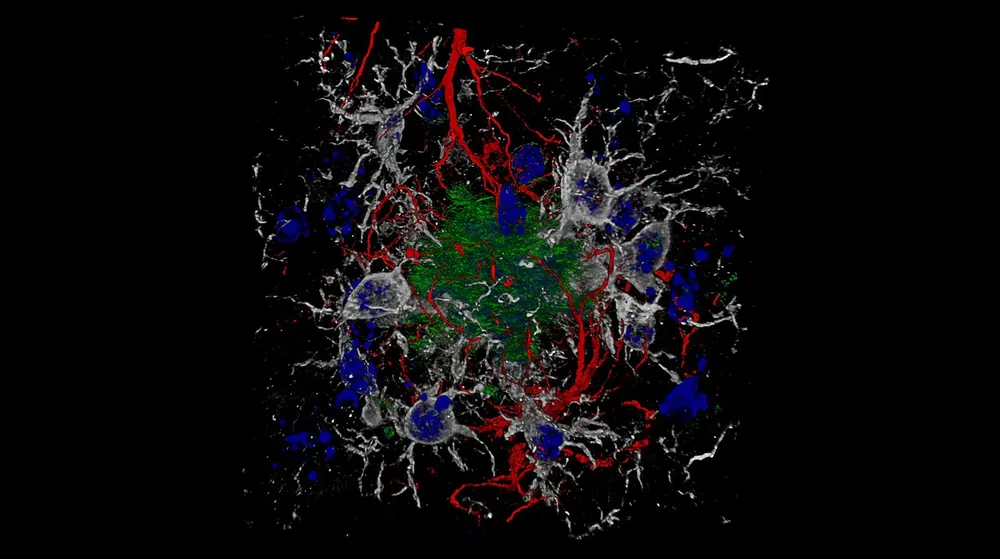
- Amyloid plaques: a protein called amyloid precursor protein (APP) in neuron membranes is normally cut by enzymes. When it is cut by beta- and gamma-secretase instead, it produces amyloid-beta, especially a sticky form called amyloid-beta 42. These fragments clump into small aggregates (oligomers), which are thought to be toxic to synapses, and then into plaques between neurons. Amyloid starts building up 15 to 20 years before symptoms appear.
- Neurofibrillary tangles: inside neurons, a protein called tau normally stabilises microtubules, the cell's transport tracks. In Alzheimer's disease, tau becomes excessively phosphorylated, detaches from microtubules and twists into tangles. Transport inside the neuron fails, and the cell eventually dies. Tau pathology spreads from neuron to neuron in a predictable pattern, starting in the entorhinal cortex and hippocampus, then moving to wider areas of the cortex.
Other processes add to damage:
- Neuroinflammation: microglia activated by amyloid release inflammatory signals that can harm synapses
- Synapse loss: the strongest correlate of memory decline
- Loss of cholinergic neurons in the basal forebrain, reducing acetylcholine
- Vascular damage and impaired clearance of waste from the brain
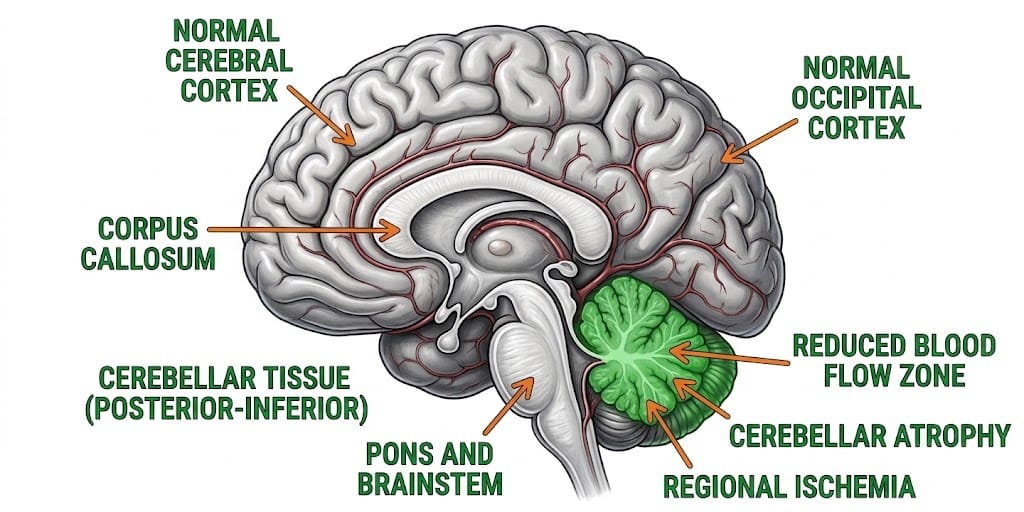
- Brain atrophy: shrinkage of the hippocampus and cortex, visible on scans
APOE e4 reduces the clearance of amyloid and increases its aggregation, explaining its effect on risk.
Why the symptoms happen
- Short-term memory loss appears first because the hippocampus is affected early.
- Word-finding difficulties reflect damage to language areas in the temporal lobes.
- Problems with planning and judgement arise as the frontal lobes are affected.
- Getting lost and difficulty judging distances result from damage to the parietal lobes.
- Changes in mood and behaviour, such as apathy, anxiety, agitation or suspicion, reflect damage to emotional networks.
- Later loss of mobility, swallowing and continence occurs as damage becomes widespread.
How treatment acts on the mechanism
Cholinesterase inhibitors (donepezil, rivastigmine, galantamine) slow the breakdown of acetylcholine, improving attention and memory for a time. Memantine blocks excessive glutamate activity at NMDA receptors, which may protect neurons. Anti-amyloid antibodies (such as lecanemab and donanemab) bind to amyloid and help the immune system clear it from the brain, modestly slowing decline in early disease in selected people. Controlling vascular risk factors protects brain blood flow.
Types
- Late-onset Alzheimer's disease: after 65; the most common
- Young-onset Alzheimer's disease: before 65
- Familial Alzheimer's disease: caused by single-gene mutations; rare
- Atypical forms: posterior cortical atrophy (visual problems first), logopenic aphasia (language problems first) and frontal variant
- Mixed dementia: Alzheimer's disease together with vascular dementia
Signs and symptoms
Early stage:
- Forgetting recent conversations or events
- Repeating questions
- Misplacing items
- Difficulty finding words
- Getting lost in familiar places
- Difficulty managing money or complex tasks
Middle stage:
- Increasing confusion and disorientation
- Difficulty recognising people
- Changes in behaviour, mood and sleep
- Needing help with daily activities
Late stage:
- Severe memory loss
- Loss of speech
- Difficulty walking, swallowing and controlling the bladder
- Complete dependence on others
How it is diagnosed
- History from the person and someone who knows them well
- Cognitive tests, such as the MoCA or ACE-III
- Blood tests to rule out reversible causes: thyroid, vitamin B12, calcium, kidney and liver function
- Brain scans (CT or MRI) to look for shrinkage and rule out other causes
- Specialist tests: amyloid PET scans, cerebrospinal fluid tests or blood biomarkers for amyloid and tau, especially when considering newer treatments
- Assessment by a memory clinic
Possible complications
- Falls and fractures
- Infections, especially pneumonia from swallowing problems
- Malnutrition and dehydration
- Delirium
- Wandering and safety risks
- Carer stress
Goals of treatment
The goals are to maintain independence and quality of life, manage symptoms, slow progression where possible, keep people safe and support carers.
Medicines
- Cholinesterase inhibitors for mild to moderate disease
- Memantine for moderate to severe disease, or alongside a cholinesterase inhibitor
- Anti-amyloid antibodies in selected people with early disease and confirmed amyloid, in specialist centres where approved; these need regular MRI monitoring for brain swelling or bleeding
- Treatment of depression, anxiety or sleep problems
- Antipsychotics only for severe distress or risk, short term
Other treatments
- Cognitive stimulation therapy
- Occupational therapy and home adaptations
- Memory aids: calendars, reminders, labelled cupboards
- Physical activity and social engagement
- Support for carers, including respite
- Advance care planning while the person can take part in decisions
Living with it and prevention
Risk may be reduced by:
- Staying physically active
- Keeping blood pressure, cholesterol and diabetes under control
- Not smoking and limiting alcohol
- Staying mentally and socially active
- Treating hearing loss
- Eating a balanced diet, such as a Mediterranean-style diet
- Protecting the head from injury
Monitoring and follow-up
People with Alzheimer's disease are reviewed regularly to assess cognition, function, medication effects and support needs. Those on anti-amyloid treatment need scheduled MRI scans.
Outlook
Alzheimer's disease progresses over years, typically 8 to 12 years after diagnosis, though this varies widely. Treatments and support can help people live well for much of this time.
Special considerations
- Young-onset: affects work, finances and families; specialist support is important
- People with Down syndrome: develop Alzheimer's disease earlier, often in their 40s or 50s
- Carers: are at risk of stress and depression and benefit from support