
Overview
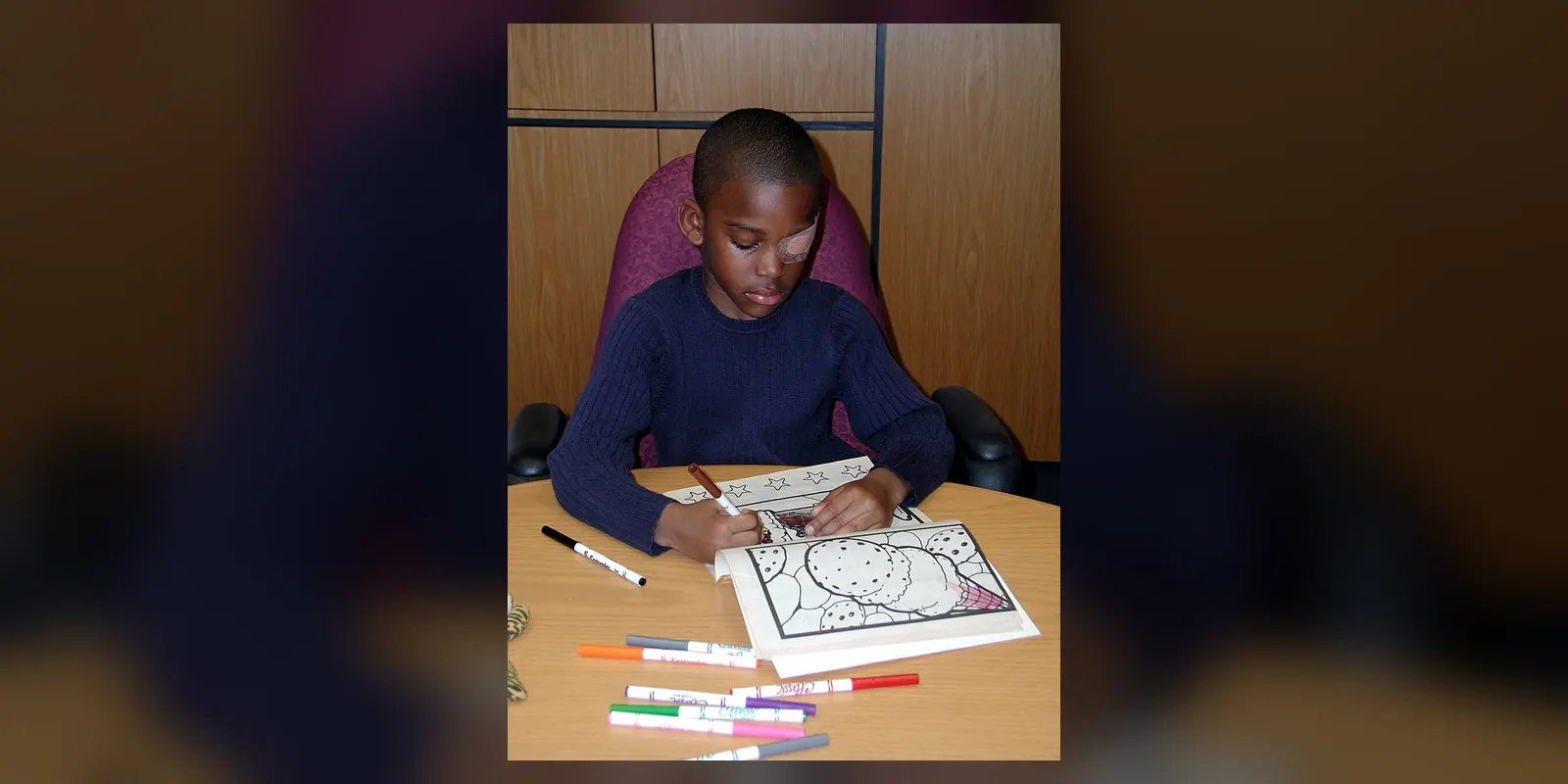
Amblyopia, often called lazy eye, is a condition in which vision in one eye does not develop properly during childhood. The eye itself may look normal, but the brain favours the other eye, so the weaker eye's vision becomes poor and cannot be fully corrected with glasses alone.
It is the most common cause of reduced vision in one eye in children, affecting about 2 to 3 percent. Amblyopia often has no obvious signs, which is why vision screening in early childhood is important. Treatment is most effective when started before the age of seven or eight, while the visual system is still developing. It usually involves glasses, followed by patching or eye drops to make the weaker eye work harder.
When to get urgent help
Seek prompt assessment for a sudden new squint, a white pupil in photographs, a drooping eyelid covering the pupil in a baby, or any eye injury.
Causes and risk factors
- Strabismus (squint): one eye turns inwards, outwards, up or down, so the brain ignores the image from that eye
- Refractive amblyopia (anisometropia): one eye is much more long-sighted, short-sighted or astigmatic than the other
- Deprivation amblyopia: something blocks light entering the eye, such as a congenital cataract or drooping eyelid (ptosis)
- Combinations of the above
Risk factors include prematurity, low birth weight, family history and developmental conditions.
How it develops (pathophysiology)
Normal visual development
At birth, the visual system is immature. During the first years of life, clear and well-aligned images from both eyes are sent through the optic nerves to the visual cortex at the back of the brain. Nerve connections from each eye compete for space in the cortex. With equal, clear input, both eyes build strong connections, and the brain learns to combine the two images into one three-dimensional picture (binocular vision). This happens during a critical period, most active in the first few years and largely complete by about seven or eight years of age.
What goes wrong
In amblyopia, one eye sends the brain a blurred, misaligned or blocked image. During the critical period:
- The brain receives conflicting or poor-quality information from that eye.
- To avoid double vision or confusion, the brain suppresses the input from the weaker eye.
- Connections from the stronger eye take over more of the visual cortex, while connections from the weaker eye weaken (competitive plasticity).
- Neurons in the visual cortex become less responsive to the weaker eye, and processing of fine detail, contrast and position is impaired.
The problem is not in the eye itself but in how the brain processes its signals. Once the critical period ends, these brain changes become harder to reverse.
Why the symptoms happen
- Reduced vision in one eye results from weaker brain processing, even with corrective glasses.
- Poor depth perception occurs because the brain is not combining images from both eyes.
- Squinting, closing one eye or tilting the head may be ways the child uses the stronger eye.
- Visible eye turn is present when strabismus is the cause.
- Crowding, difficulty seeing letters close together, is typical of amblyopic vision.
How treatment acts on the mechanism
Glasses give the weaker eye a clear image, which alone improves vision in many children. Patching the stronger eye, or atropine drops that blur it, forces the brain to use the weaker eye, strengthening its connections in the visual cortex while plasticity remains. Surgery for strabismus or cataract removes the cause. Newer binocular treatments use games or videos that encourage both eyes to work together.
Types
- Strabismic amblyopia
- Refractive (anisometropic) amblyopia
- Deprivation amblyopia
- Bilateral amblyopia, from high refractive errors in both eyes
Signs and symptoms
Amblyopia often causes no noticeable symptoms. Possible signs include:
- One eye turning in or out
- Squinting or closing one eye
- Tilting the head to look at things
- Poor depth perception, bumping into things
- Difficulty with reading or fine tasks
- A child objecting strongly when one eye is covered
How it is diagnosed
- Vision screening in early childhood and at school entry
- Visual acuity tests using age-appropriate charts or picture tests
- Eye examination with dilating drops to check focusing (refraction) and the health of the eye
- Cover tests to detect strabismus
- Assessment by an orthoptist or eye specialist
Possible complications
- Permanent reduced vision in one eye if untreated
- Poor depth perception
- Increased risk of severe vision loss if the stronger eye is injured later
- Effects on self-esteem from wearing a patch or from a visible squint
Goals of treatment
Treatment aims to achieve the best possible vision in the weaker eye, encourage both eyes to work together, and correct any underlying cause.
Medicines
- Atropine eye drops placed in the stronger eye to blur it, as an alternative to patching
Other treatments
- Glasses to correct refractive error, usually the first step
- Patching the stronger eye for a set number of hours each day
- Binocular treatments using specially designed games or videos
- Surgery for strabismus, cataract or ptosis
- Regular reviews to adjust treatment
Living with it and prevention
- Attend childhood vision screening
- Have a child's eyes checked if there is a family history of squint or amblyopia
- Encourage children to wear glasses and patches as prescribed
- Make patching fun with activities and rewards
Monitoring and follow-up
Children are reviewed every few months during treatment to measure vision and adjust patching. After treatment ends, follow-up continues to check that vision does not slip back.
Outlook
Most children who start treatment early have significant improvement in vision. Results are less complete in older children, though some improvement is possible in teenagers and adults.
Special considerations
- Babies with congenital cataract need urgent surgery to prevent deprivation amblyopia
- Older children and adults: some benefit from treatment, though less than younger children
- Children with developmental conditions may need adapted treatment