
Overview
Anisakiasis is an infection caused by the larvae of a roundworm called Anisakis, which lives in marine fish and squid. People become infected by eating raw, undercooked, lightly salted, pickled or smoked seafood that contains live larvae, for example in sushi, sashimi, ceviche, pickled herring or gravlax.
Within hours of eating infected fish, the larvae can burrow into the lining of the stomach or intestine, causing sudden severe stomach pain, nausea and vomiting. Some people instead develop an allergic reaction to the worm, ranging from hives to anaphylaxis. Humans are an accidental host, so the larvae cannot complete their life cycle and die within a few weeks, but removing them by endoscopy gives rapid relief.
Anisakiasis is becoming more widely recognised as raw seafood dishes grow in popularity worldwide. It is often mistaken for food poisoning, a stomach ulcer or appendicitis, so mentioning recent raw fish to a doctor helps reach the right diagnosis quickly.
When to get urgent help
Seek emergency help for difficulty breathing, throat swelling or collapse after eating fish, or for severe abdominal pain with vomiting or a swollen abdomen.
Causes and risk factors
- Eating raw or undercooked seafood containing live Anisakis larvae, such as herring, mackerel, salmon, cod, anchovies and squid
- Dishes such as sushi, sashimi, ceviche, poke, pickled or marinated fish and cold-smoked fish
- Most common in countries with high raw fish consumption, such as Japan, Spain, the Netherlands and Korea
How it develops (pathophysiology)
The parasite's life cycle
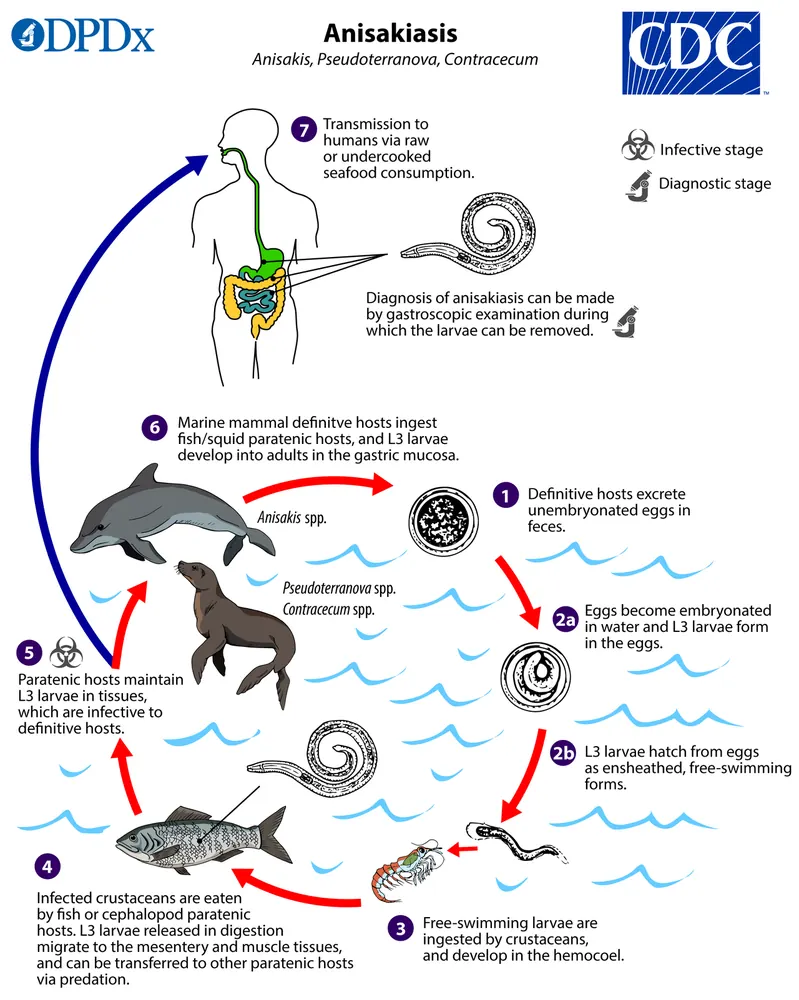
Anisakis worms normally live in the stomachs of marine mammals such as whales, dolphins and seals. Their eggs pass into the sea, where larvae are eaten by small crustaceans (krill). Fish and squid eat the krill, and the larvae migrate into their gut and muscle, where they wait to be eaten by a marine mammal. Humans become accidental hosts when they eat infected fish raw.
What goes wrong
- Ingestion: live third-stage larvae, about 2 to 3 cm long, are swallowed with seafood.
- Invasion: within hours, larvae use their mouthparts and release proteolytic enzymes to burrow into the stomach or small bowel lining.
- Inflammation: the immune system responds strongly, with a local reaction rich in eosinophils, causing swelling, ulceration and sometimes a mass called an eosinophilic granuloma.
- Allergic reaction: the larvae release proteins that are potent allergens. In sensitised people, these trigger IgE-mediated reactions, with histamine release causing hives, angioedema or anaphylaxis. Some people become allergic even to cooked or frozen fish because heat-stable allergens remain.
- Death of larvae: because humans are not a suitable host, larvae die within about two to three weeks, but inflammation may persist.
Why the symptoms happen
- Sudden, severe upper abdominal pain, nausea and vomiting within hours (gastric anisakiasis) are caused by larvae penetrating the stomach wall.
- Lower abdominal pain, bloating and bowel obstruction a few days later (intestinal anisakiasis) occur when larvae invade the small bowel, causing swelling that can narrow the lumen.
- Hives, swelling and wheezing reflect the allergic response.
- Raised eosinophils in the blood reflect the immune response to the parasite.
How treatment acts on the mechanism
Endoscopic removal of larvae from the stomach immediately relieves symptoms by removing the source of invasion and allergens. Albendazole may help in some cases, though evidence is limited. Antihistamines, steroids and adrenaline treat allergic reactions. Freezing fish at specified temperatures and times, or cooking thoroughly, kills larvae and prevents infection.
Types
- Gastric anisakiasis: the most common form
- Intestinal anisakiasis
- Ectopic anisakiasis: larvae migrate outside the gut, rarely
- Allergic anisakiasis (gastroallergic): allergic symptoms with or without gut symptoms
Signs and symptoms
- Sudden severe stomach pain within a few hours of eating raw fish
- Nausea and vomiting
- Abdominal bloating and pain lower in the abdomen a few days later
- Diarrhoea, sometimes with blood
- Hives, itching or swelling
- Wheezing or difficulty breathing (allergic reaction)
- Sometimes a tingling feeling in the throat, and coughing up the worm
Gastric symptoms usually begin 1 to 12 hours after the meal, while intestinal symptoms usually start 5 to 7 days later. Allergic symptoms can start within an hour.
How it is diagnosed
- History of recent raw or undercooked seafood
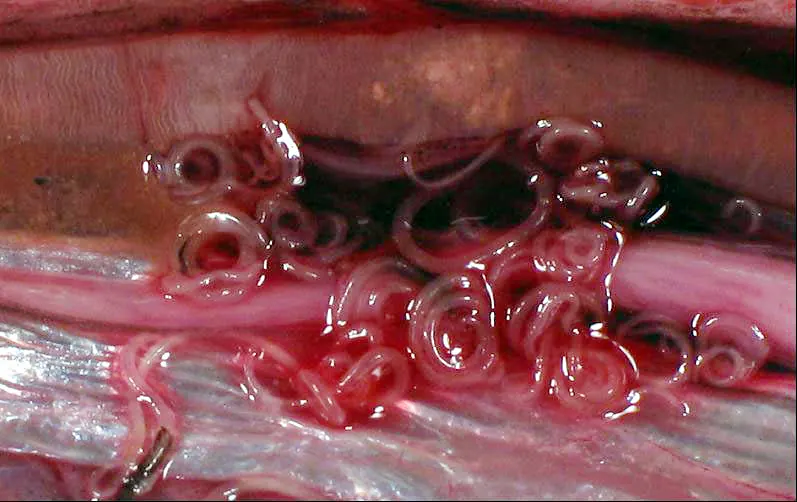
- Upper endoscopy, which can show and remove larvae
- Blood tests: raised eosinophils, specific IgE to Anisakis
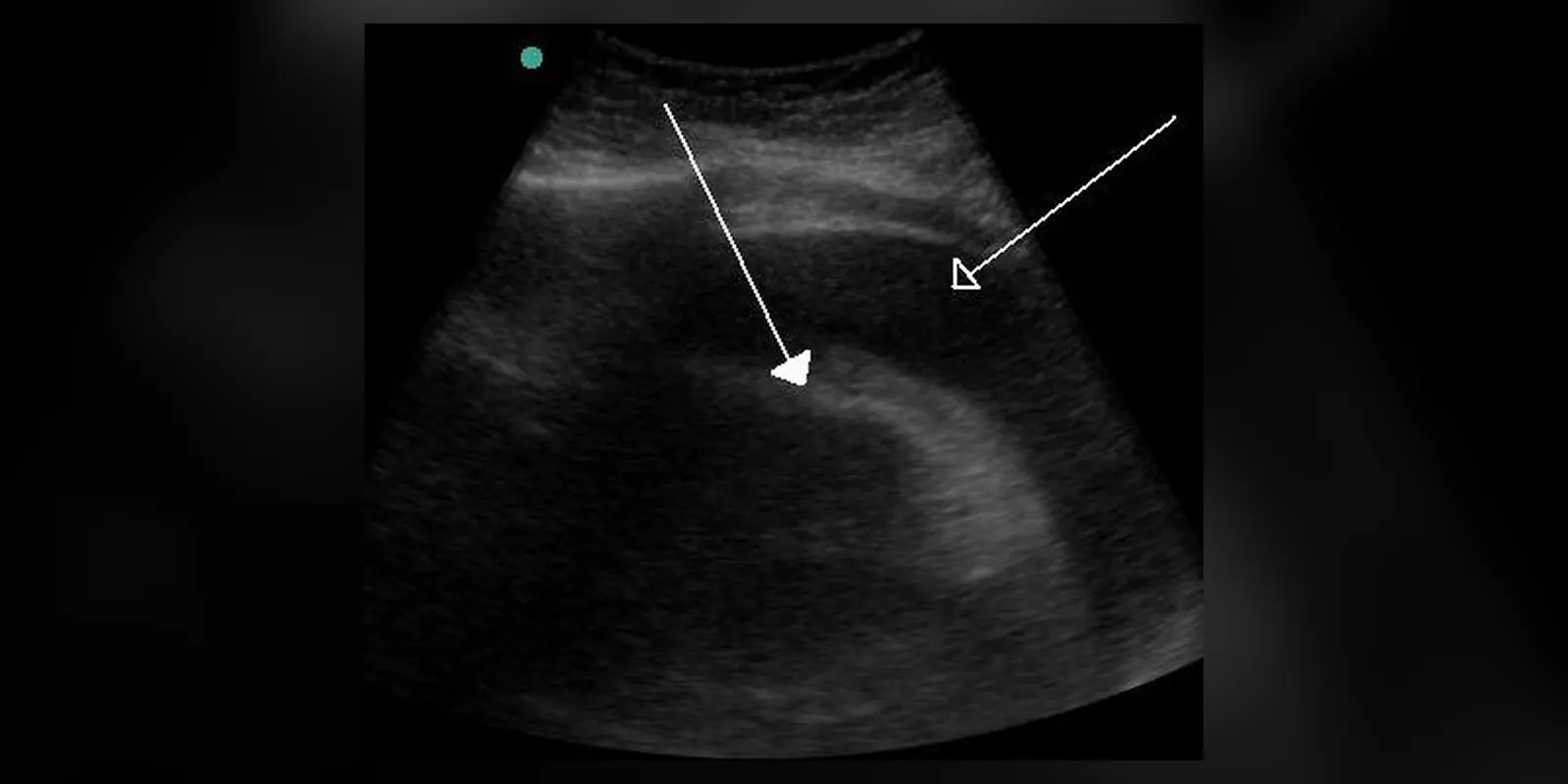
- Ultrasound or CT for intestinal disease, which may show bowel wall thickening
- Allergy testing for suspected allergic anisakiasis
Possible complications
- Bowel obstruction
- Perforation (rare)
- Peritonitis
- Anaphylaxis
- Chronic abdominal symptoms
Goals of treatment
Treatment aims to remove larvae where possible, relieve symptoms, treat allergic reactions and prevent reinfection.
Medicines
- Antihistamines and steroids for allergic symptoms
- Adrenaline for anaphylaxis
- Albendazole in some cases
- Pain relief and anti-sickness medicines
Other treatments
- Endoscopic removal of larvae
- Supportive care for intestinal anisakiasis, which often settles without surgery
- Surgery for obstruction or perforation, rarely
Living with it and prevention
- Cook fish thoroughly, to at least 63°C in the centre
- Freeze fish intended for raw consumption at -20°C for at least seven days, or -35°C for 15 hours, as recommended by food safety agencies
- Buy sushi-grade fish from reputable suppliers
- Gut fish soon after catching
- Salting, pickling, smoking at low temperatures and marinating do not reliably kill larvae
- People with Anisakis allergy may need to avoid fish entirely
Monitoring and follow-up
Most people recover fully after removal or once larvae die. Those with allergic reactions should be referred to an allergy specialist.
Outlook
The outlook is excellent. Symptoms resolve after larval removal or within a few weeks. Allergic sensitisation may persist.
Special considerations
- People who frequently eat raw fish are at higher risk
- People with fish allergy may actually be allergic to Anisakis proteins
- Fishermen and fish processors may develop occupational allergy