
Overview
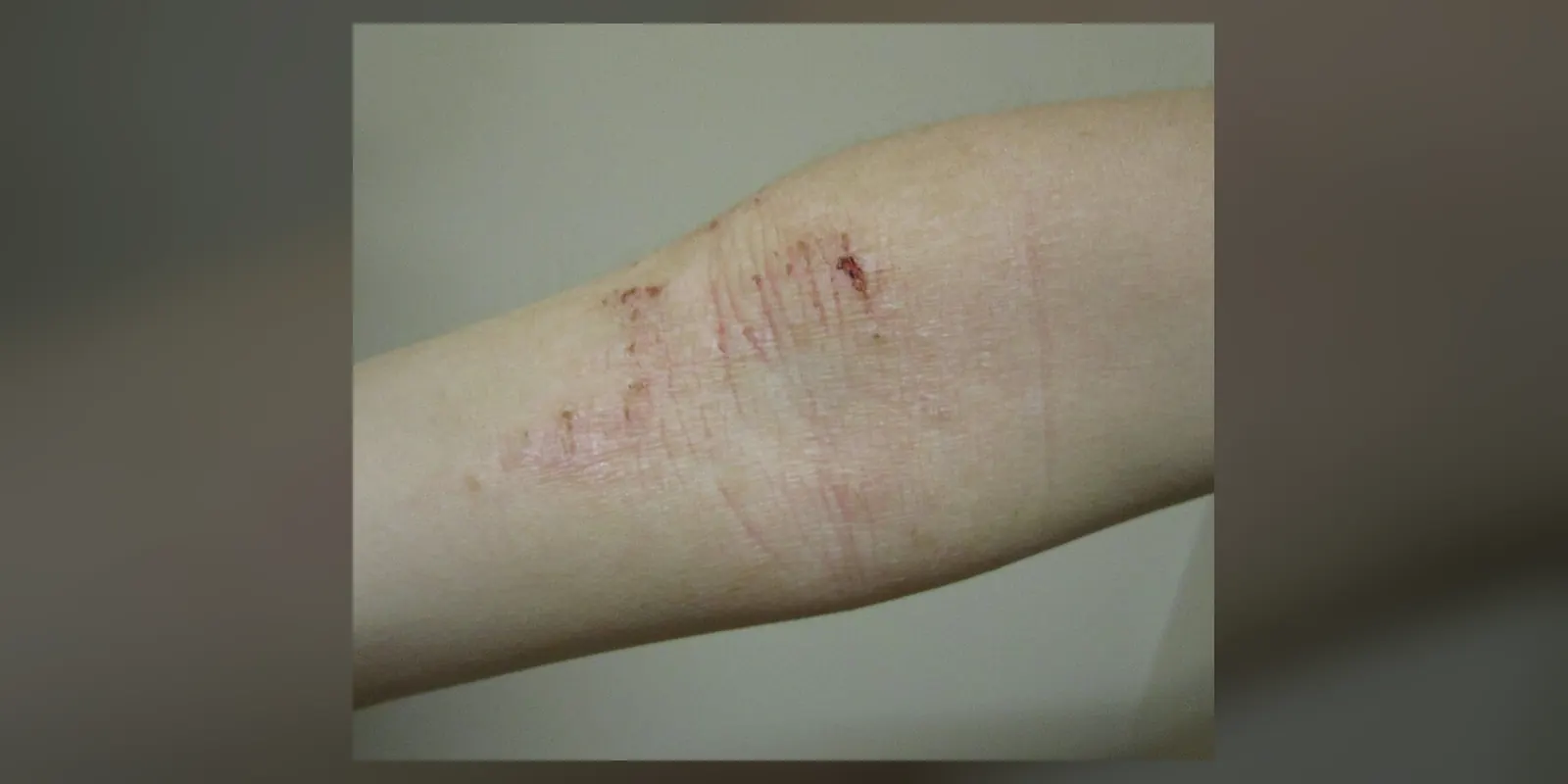
Atopic dermatitis, the most common type of eczema, is a long-term skin condition that causes dry, itchy and inflamed skin. It often starts in babies and young children, affecting the face, the creases of the elbows and knees, and the hands, but it can continue into adulthood or start later in life.
Eczema typically comes and goes, with periods of flare-ups, when the skin becomes red, intensely itchy, cracked or weepy, and periods when it settles. It is not contagious. It is often linked with other allergic conditions, such as asthma, hay fever and food allergies. There is no cure, but daily moisturising, avoiding triggers and treatments such as steroid creams control symptoms for most people, and newer medicines help those with severe eczema.
When to get urgent help
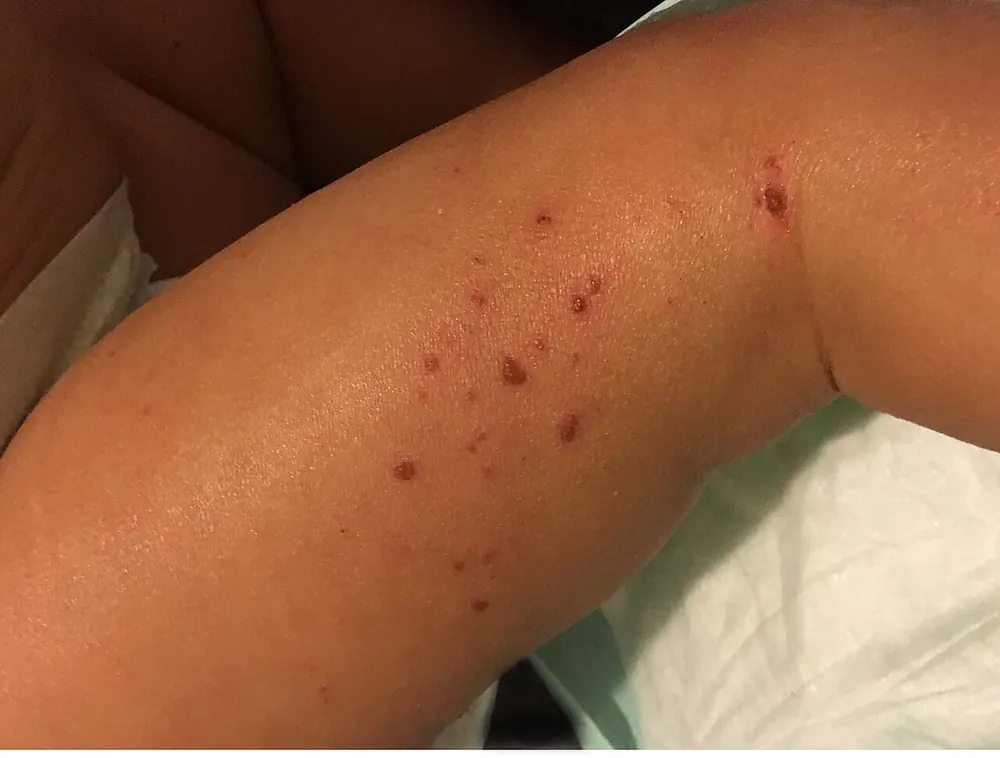
Seek urgent help for rapidly worsening painful eczema with clusters of punched-out sores or blisters and fever (possible eczema herpeticum), spreading redness with fever, or severe weeping and crusting.
Causes and risk factors
- Genetics: a family history of eczema, asthma or hay fever; mutations in the filaggrin gene are a strong risk factor
- Skin barrier dysfunction
- Immune system tendency to allergic (Th2) inflammation
- Environmental triggers:
- Soaps, detergents, bubble baths and shampoos
- Hot water and long baths
- Wool and synthetic fabrics
- Dry or cold weather, heat and sweating
- Allergens: house dust mites, pet dander, pollen
- Infections, especially Staphylococcus aureus
- Stress
- Certain foods in some young children
How it develops (pathophysiology)
Normal skin barrier
The outer skin layer, the stratum corneum, works like a brick wall: flattened dead skin cells (bricks) held together by lipids such as ceramides (mortar). The protein filaggrin helps structure these cells and breaks down into natural moisturising factors that keep skin hydrated. This barrier keeps water in and irritants, allergens and microbes out.
What goes wrong
Atopic dermatitis results from a combination of barrier failure and immune dysregulation, which reinforce each other:
- Barrier defects: filaggrin mutations, reduced ceramides and other changes make the stratum corneum leaky. Water escapes (transepidermal water loss), causing dry skin, and irritants and allergens penetrate more easily.
- Immune activation: allergens and microbes entering the skin activate immune cells, which skew towards a type 2 (Th2) immune response, releasing interleukin-4 (IL-4), interleukin-13 (IL-13) and interleukin-31 (IL-31).
- Feedback loop: IL-4 and IL-13 further reduce filaggrin and lipid production, worsening the barrier. They also reduce natural antimicrobial peptides.
- Itch: IL-31 and other signals stimulate itch nerves. Scratching damages the skin further, releasing more inflammatory signals (itch-scratch cycle).
- Microbial imbalance: Staphylococcus aureus colonises eczema skin in most people, producing toxins that drive inflammation and flares.
- Chronic changes: long-term scratching and inflammation thicken the skin (lichenification).
This barrier and immune tendency also explains the atopic march, where children with eczema are more likely to develop food allergy, asthma and hay fever.
Why the symptoms happen
- Dry skin reflects water loss through a damaged barrier.
- Itching is driven by inflammatory signals acting on nerve endings.
- Redness and swelling result from inflammation.
- Weeping and crusting occur in acute flares or with infection.
- Thickened skin results from chronic scratching.
- Darker or lighter patches can follow inflammation, especially in darker skin.
How treatment acts on the mechanism
Emollients restore lipids and reduce water loss, repairing the barrier. Topical steroids reduce inflammation. Topical calcineurin inhibitors (tacrolimus, pimecrolimus) block T cell activation. Dupilumab and tralokinumab/lebrikizumab block IL-4 and IL-13 signalling. JAK inhibitors block signalling from multiple cytokines. Antiseptics and antibiotics treat infection.
Types
- Infantile eczema: face, scalp and outer limbs
- Childhood eczema: elbow and knee creases, wrists, ankles
- Adult eczema: hands, eyelids, neck, flexures
- By severity: mild, moderate or severe
Signs and symptoms
- Dry, rough or scaly skin
- Intense itching, often worse at night
- Red or darker inflamed patches (redness may be less visible on darker skin)
- Small bumps that may weep fluid and crust
- Cracked, sore skin
- Thickened, leathery skin from scratching
- Disturbed sleep
- Darker or lighter patches after flares
How it is diagnosed
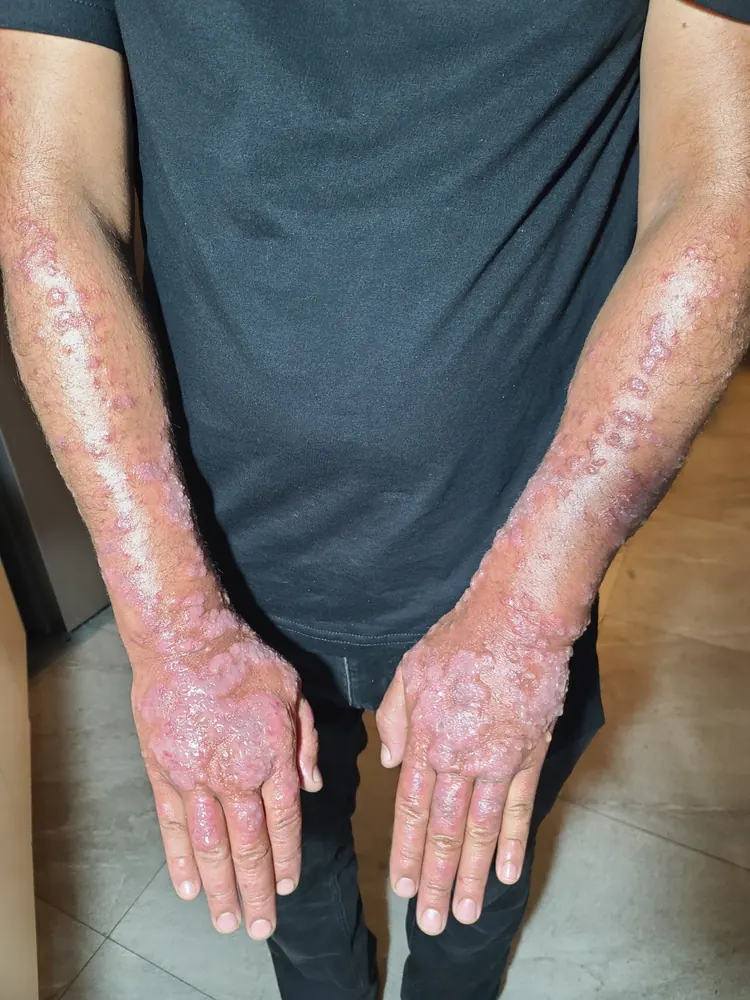
- Clinical assessment of the rash, its location and history
- Severity scores, such as EASI or POEM
- Allergy testing only if a specific allergy is suspected
- Skin swabs if infection is suspected
- Patch testing if contact dermatitis is suspected
Possible complications
- Skin infections: bacterial (impetigo), viral (eczema herpeticum, a medical emergency), fungal
- Sleep disturbance and tiredness
- Emotional and psychological effects
- Effects on school and work
- Thickened skin and pigment changes
- Eye problems in severe eczema
Goals of treatment
Treatment aims to repair the skin barrier, control inflammation and itch, prevent flares and infections, and improve sleep and quality of life.
Medicines
- Emollients daily and frequently, even when skin is clear
- Topical corticosteroids for flares, in strength suited to the area and severity
- Topical calcineurin inhibitors for the face and sensitive areas
- Topical PDE4 inhibitors or topical JAK inhibitors in some countries
- Antihistamines (sedating) occasionally to help sleep
- Antibiotics or antivirals for infections
- Systemic treatments for severe eczema: ciclosporin, methotrexate, dupilumab, tralokinumab, lebrikizumab, JAK inhibitors (abrocitinib, upadacitinib, baricitinib)
- Phototherapy (narrowband UVB)
Other treatments
- Bathing: short, lukewarm baths with emollient soap substitutes
- Wet wraps for severe flares in children
- Avoiding triggers
- Keeping nails short and wearing cotton gloves at night
- Education for patients and families
Living with it and prevention
- Moisturise regularly, especially after bathing
- Use soap substitutes instead of soap
- Wear soft, breathable fabrics such as cotton
- Avoid overheating
- Use fragrance-free products
- Manage stress
- Follow an eczema action plan
- Introduce allergenic foods in infancy according to current advice, rather than avoiding them without testing
Monitoring and follow-up
Regular reviews assess control, side effects and quality of life. People on systemic treatments need blood monitoring.
Outlook
Many children with eczema improve as they grow, though some continue to have it as adults. Most people can control it well with treatment.
Special considerations
- Babies: emollients from early on and careful bathing
- Darker skin: redness may appear purple, grey or brown, and pigment changes are more common
- Pregnancy: emollients and mild topical steroids are generally safe