
Overview
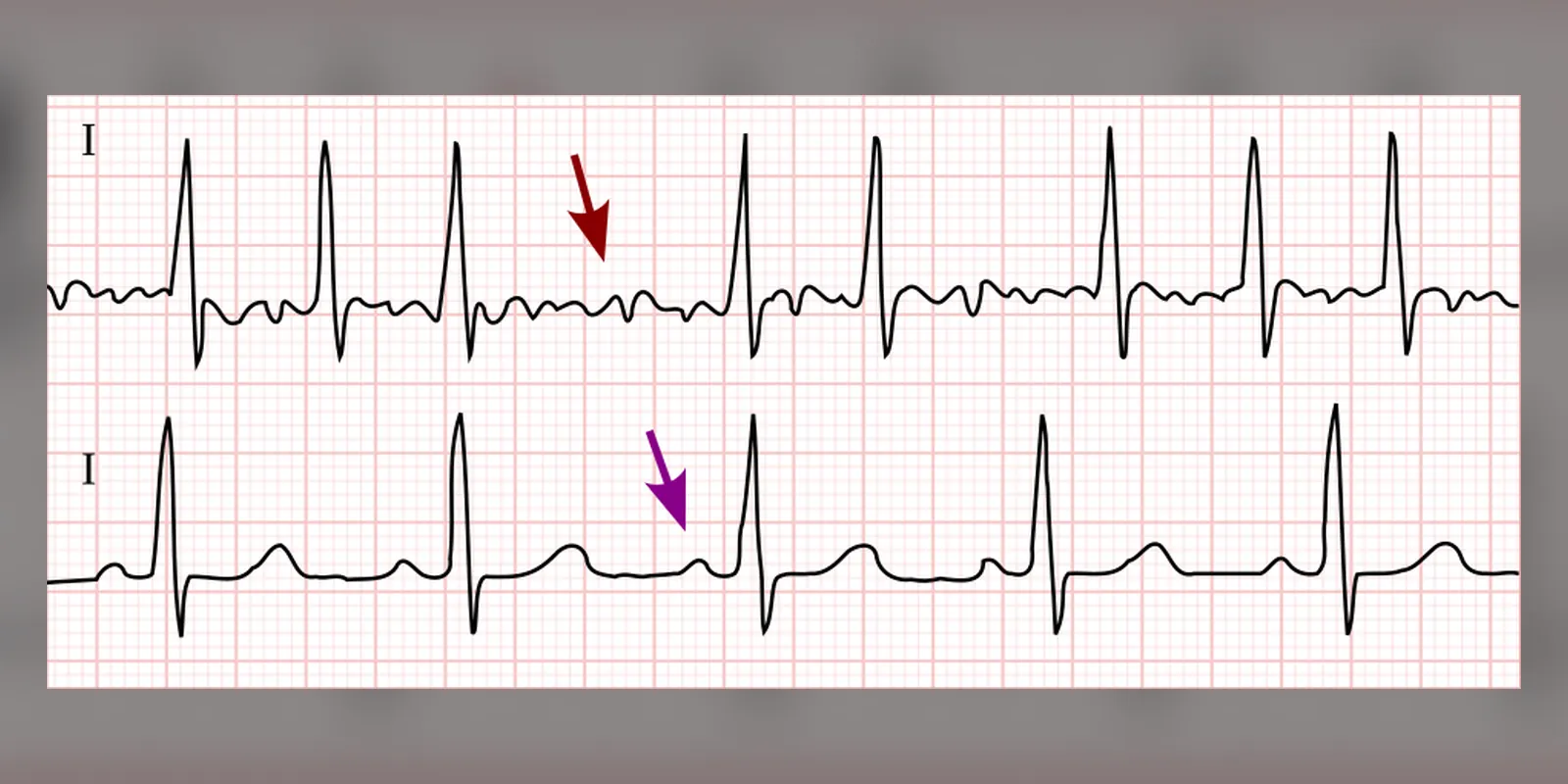
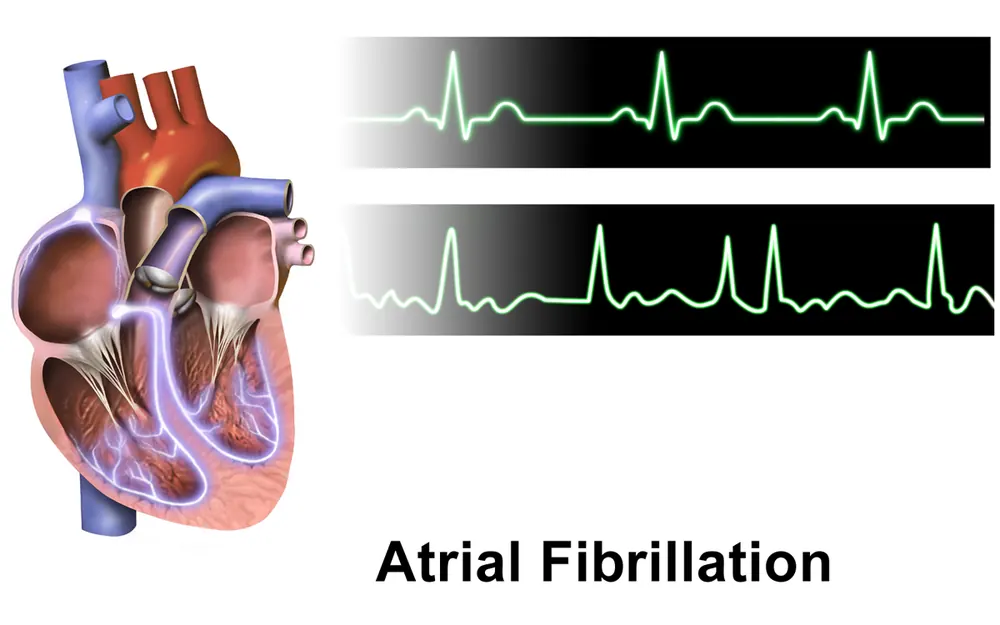
Atrial fibrillation (AF) is the most common abnormal heart rhythm. Instead of beating in a regular, coordinated way, the upper chambers of the heart (the atria) quiver chaotically. As a result, the heartbeat becomes irregular and often fast.
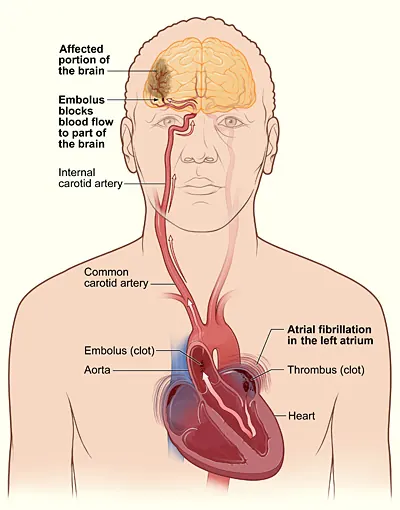
AF can cause palpitations, breathlessness, tiredness and dizziness, but many people have no symptoms at all. Its main danger is stroke: blood can pool and form clots in the atria, which can travel to the brain. AF also increases the risk of heart failure. It becomes more common with age, affecting about one in ten people over 80. Treatment focuses on preventing stroke with anticoagulants, controlling heart rate or rhythm, and managing risk factors.
When to get urgent help
Call emergency services for stroke symptoms (face drooping, arm weakness, speech difficulty), chest pain, severe breathlessness or fainting. Seek urgent help for serious bleeding while taking anticoagulants.
Causes and risk factors
- Older age
- High blood pressure
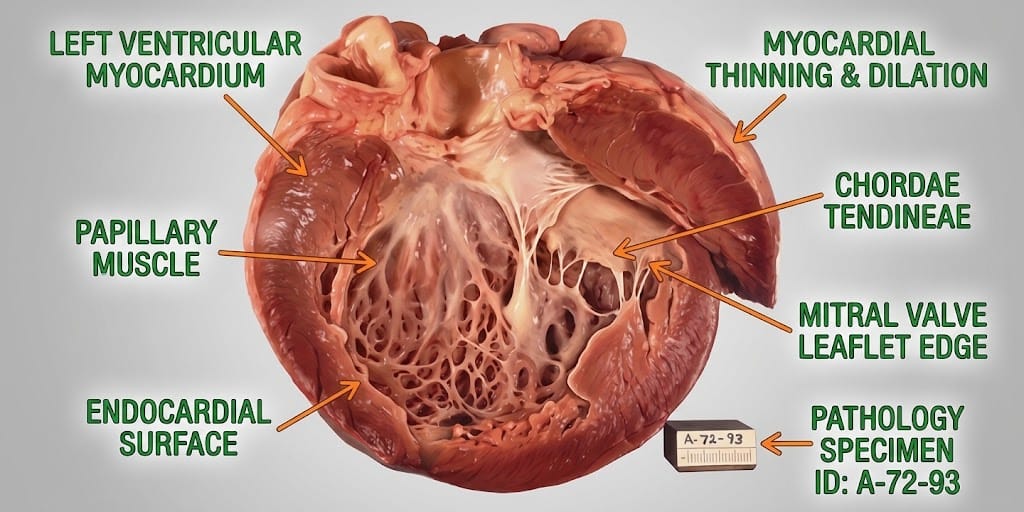
- Heart disease: coronary artery disease, heart failure, valve disease (especially mitral)
- Obesity and obstructive sleep apnoea
- Diabetes
- Excess alcohol, including binge drinking
- Overactive thyroid
- Lung disease, such as COPD
- Infections, surgery and acute illness
- Endurance sport at a very high level
- Family history and genetics
How it develops (pathophysiology)
Normal heart rhythm
The heartbeat starts in the sinoatrial (SA) node, the heart's natural pacemaker in the right atrium. Each electrical impulse spreads across both atria, making them contract, then passes through the atrioventricular (AV) node, which slows it slightly, before travelling to the ventricles. This produces a regular rhythm of 60 to 100 beats per minute at rest.
What goes wrong
In AF, organised atrial activity is replaced by rapid, chaotic electrical activity (300 to 600 impulses per minute):
- Triggers: rapid electrical firing often starts in muscle sleeves around the pulmonary veins, where they enter the left atrium.
- Substrate: the atria become stretched, inflamed and scarred (atrial remodelling) due to age, high blood pressure, heart failure, obesity and other factors. Scarring creates areas of slow, uneven conduction, allowing multiple wandering wavelets and re-entry circuits that sustain AF.
- "AF begets AF": AF itself causes electrical and structural changes in the atria that make it more likely to continue, which is why it often progresses from occasional episodes to permanent AF.
Consequences
- Irregular ventricular rhythm: the AV node receives far more impulses than it can conduct and lets some through irregularly, causing an irregular, often fast heartbeat.
- Loss of atrial contraction: the atria no longer squeeze effectively, reducing heart output by up to 20 to 30 percent, especially in people with stiff hearts.
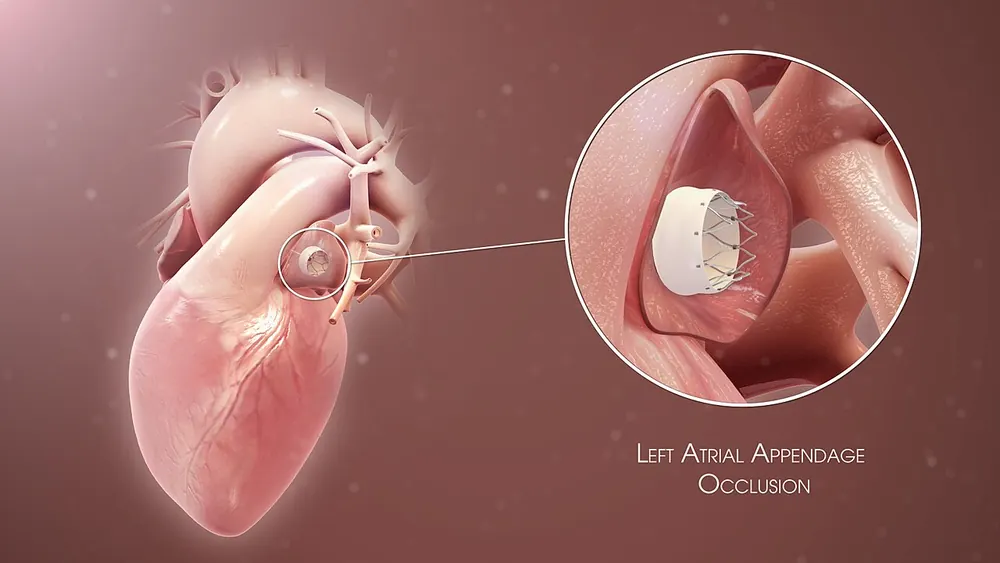
- Blood stasis and clots: blood flows slowly in the left atrium, particularly the left atrial appendage, a small pouch. Combined with changes in the atrial wall and blood, this promotes clot formation (Virchow's triad). Clots can travel to the brain, causing stroke.
- Tachycardia-induced cardiomyopathy: a persistently fast heart rate can weaken the heart muscle.
Why the symptoms happen
- Palpitations and an irregular pulse reflect the chaotic rhythm.
- Breathlessness and tiredness result from reduced cardiac output.
- Dizziness or fainting may occur with very fast or slow rates.
- Chest pain can occur when a fast rate increases heart oxygen demand.
How treatment acts on the mechanism
Anticoagulants (DOACs such as apixaban, rivaroxaban, edoxaban, dabigatran, or warfarin) prevent clot formation, reducing stroke risk by about two thirds. Rate control medicines (beta-blockers, calcium channel blockers, digoxin) slow conduction through the AV node. Rhythm control with antiarrhythmics, cardioversion (an electric shock to restore normal rhythm) or catheter ablation (isolating the pulmonary veins) aims to restore sinus rhythm. Managing risk factors such as weight, alcohol, blood pressure and sleep apnoea reduces AF burden.
Types
- Paroxysmal AF: episodes stop on their own within seven days
- Persistent AF: lasts more than seven days
- Long-standing persistent AF: more than one year
- Permanent AF: accepted with no further attempts at rhythm control
Signs and symptoms
- Palpitations: a fluttering, racing or irregular heartbeat
- Breathlessness
- Tiredness and reduced exercise ability
- Dizziness or light-headedness
- Chest discomfort
- Fainting (rare)
- No symptoms in many people, discovered on routine checks
How it is diagnosed
- Pulse check: irregularly irregular pulse
- ECG: confirms AF
- Holter monitor or event recorder for intermittent AF
- Smartwatch or handheld ECG recordings may help
- Echocardiogram to assess heart structure
- Blood tests: thyroid, kidney function, full blood count
- Stroke risk score (CHA2DS2-VASc) and bleeding risk assessment
Possible complications
- Stroke and transient ischaemic attack
- Heart failure
- Tachycardia-induced cardiomyopathy
- Dementia
- Reduced quality of life
- Bleeding from anticoagulants
Goals of treatment
Treatment aims to prevent stroke, control symptoms with rate or rhythm control, and treat underlying conditions and risk factors.
Medicines
- Anticoagulants: DOACs (apixaban, rivaroxaban, edoxaban, dabigatran) or warfarin
- Rate control: beta-blockers, diltiazem or verapamil, digoxin
- Rhythm control: flecainide, amiodarone, dronedarone, sotalol
- Pill-in-the-pocket flecainide for some people with occasional episodes
Other treatments
- Electrical cardioversion
- Catheter ablation (pulmonary vein isolation)
- Left atrial appendage closure for people who cannot take anticoagulants
- Pacemaker with AV node ablation in selected people
- Risk factor management: weight loss, alcohol reduction, exercise, blood pressure control, sleep apnoea treatment
Living with it and prevention
- Keep blood pressure under control
- Maintain a healthy weight
- Limit alcohol
- Be physically active
- Treat sleep apnoea
- Stop smoking
- Take anticoagulants exactly as prescribed
Monitoring and follow-up
Regular reviews check symptoms, heart rate, kidney function (for anticoagulant dosing), bleeding risk and stroke risk.
Outlook
With anticoagulation and good management, most people with AF live full lives. Untreated AF greatly increases the risk of stroke and heart failure.
Special considerations
- Older adults: higher stroke risk, but also higher bleeding risk; anticoagulation is still usually recommended
- Pregnancy: AF is uncommon; treatment needs specialist input
- Athletes: may develop AF after years of endurance training