

Posted 11 months ago 908 views 10 mins read
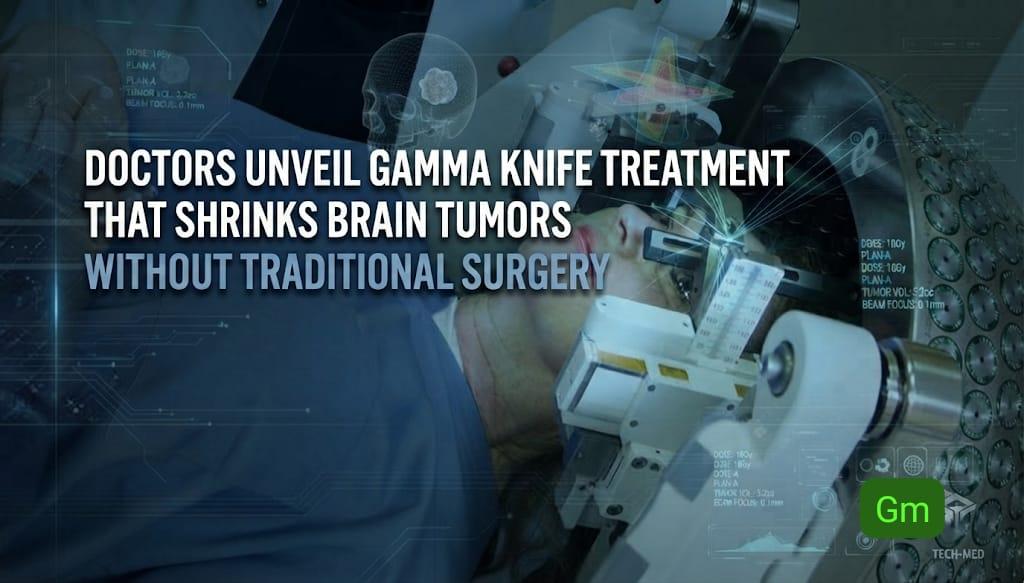
Imagine delivering a dose of radiation 200 times more powerful than a chest X-ray with the precision of a skilled surgeon's blade without making a single incision. This isn't science fiction. It's happening right now in advanced medical centers worldwide, where the Gamma Knife is revolutionizing how we treat brain tumors and neurological conditions. The numbers are staggering: studies involving over 6,000 patients show local tumor control rates between 84-97% for brain metastases. That's not just good it's extraordinary for a procedure that patients walk out of the same day they arrive.
Don't let the name fool you there's no actual knife involved! The Gamma Knife uses 192 precisely focused beams of gamma radiation that converge on the tumor like a perfectly orchestrated symphony. Each individual beam is too weak to harm healthy tissue as it passes through the brain. But when all 192 beams meet at the target? The tumor receives a lethal dose of radiation with sub-millimeter accuracy.

Dr. Lubdha Shah from the Mayo Clinic explains it perfectly: "It's like using a magnifying glass to focus sunlight harmless rays become incredibly powerful when concentrated at one point."
The latest technology, called the Gamma Knife Icon, has eliminated one of the biggest patient concerns: the stereotactic head frame. Earlier versions required surgeons to bolt a metal frame directly to the patient's skull using local anesthesia. While effective, this understandably made many patients anxious.
Read also : Imaging Tests: Unlocking the Secrets of Your Internal Health
The Icon system now offers frameless treatment using a comfortable mask instead. This advancement has opened doors for patients who previously couldn't tolerate the procedure and allows for fractionated treatments over multiple sessions when needed.
Recent research published in Personalized Medicine reveals something remarkable about Gamma Knife treatment's impact on cognitive function. In a study of 49 glioblastoma patients aged 55 and older, those treated with Gamma Knife radiosurgery experienced significantly less cognitive decline compared to conventional radiation therapy PMC.

•Gamma Knife patients: MMSE scores declined by only 1.9 points over 12 months
•Conventional radiation patients: MMSE scores declined by 4.8 points
•Similar patterns emerged with MoCA cognitive assessments
This isn't just about survival it's about maintaining quality of life. Dr. Maria Rodriguez, a neurosurgeon at Cleveland Clinic, notes: "We're not just treating the tumor; we're preserving the person."

The versatility of Gamma Knife technology spans multiple conditions. Here's what the latest research shows for different tumor types:
Meningiomas achieve remarkable long-term control. A comprehensive study of 5,300 patients demonstrated:
•95.2% progression-free survival at 5 years
•88.6% progression-free survival at 10 years
•Only 6.6% experienced treatment-related complications
Vestibular schwannomas (acoustic neuromas) show exceptional outcomes. In a 15-year study of 829 patients, the tumor control rate reached 97% without requiring traditional surgery. Perhaps most importantly, less than 1% experienced facial nerve problems a significant concern with conventional surgery PMC.

Brain metastases respond remarkably well, with local control rates consistently exceeding 85% across multiple studies. This is particularly significant for cancer patients who may not be candidates for traditional surgery due to their overall health status.
• The Patient Experience: What Actually Happens
Here's what sets Gamma Knife apart from traditional brain surgery: patients arrive in the morning and typically go home the same day. No general anesthesia. No surgical incisions. No weeks of recovery.
The process begins with precise imaging usually an MRI or CT scan to map the exact location, size, and shape of the tumor. This data feeds into sophisticated treatment planning software that calculates the optimal beam arrangement.
During treatment, patients lie comfortably on the treatment table while the Gamma Knife's 192 radiation sources rotate around their head. The entire radiation delivery typically takes 20-60 minutes, depending on the complexity of the case. Many patients report feeling nothing during the actual treatment.
Recovery is dramatically different from traditional brain surgery. Most patients return to normal activities within 1-2 days, compared to 4-8 weeks after conventional neurosurgery.
When Gamma Knife Isn't the Answer
•Tumors smaller than 3-4 centimeters in diameter
•Well-defined lesions with clear borders
•Patients who can remain still during treatment
•Cases where the tumor location allows safe radiation delivery
•Larger tumors may require conventional surgery or alternative treatments. Additionally, some patients with certain medical implants or severe claustrophobia may not be candidates for the procedure.
The evolution continues. Researchers are exploring combination therapies that pair Gamma Knife radiosurgery with immunotherapy and targeted drug treatments. Early studies suggest these combinations may enhance tumor control while further reducing side effects.
Advanced motion tracking systems are becoming more sophisticated, potentially expanding treatment options for patients who previously couldn't remain sufficiently still during treatment.Experience with Gamma Knife?
For patients facing a brain tumor diagnosis, this technology provides something invaluable: the possibility of highly effective treatment while preserving both cognitive function and quality of life. That's not just medical progress it's revolutionary patient care
Leading the way in health excellence through innovation, expertise, care and support.