11 months ago


Posted 11 months ago 1014 views 10 mins read
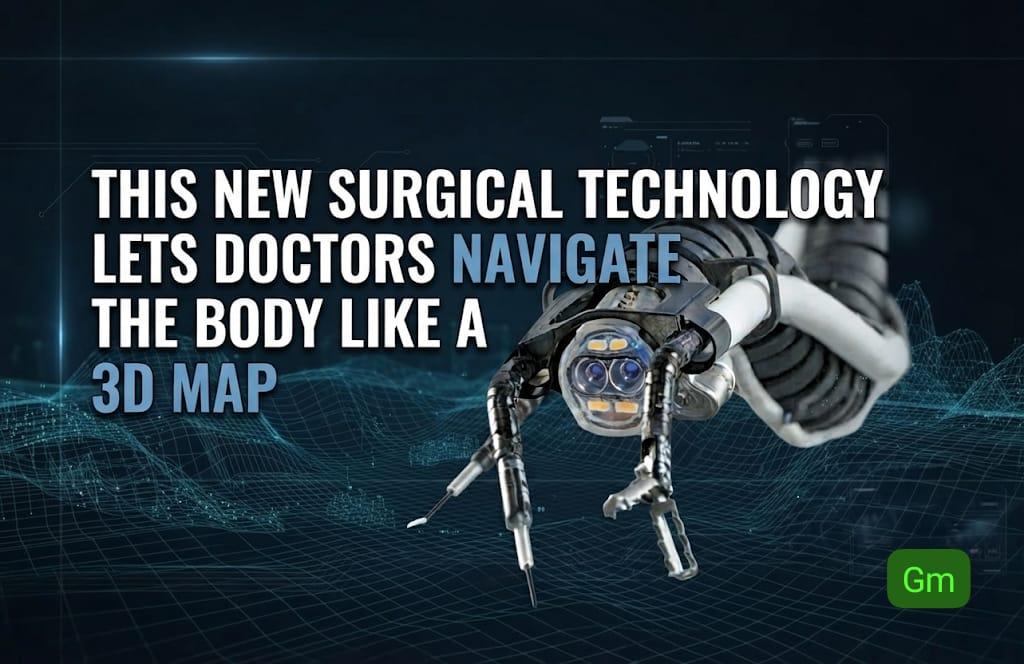
Eleven times more accurate. That's the stunning precision improvement surgeons are achieving with 3D surgical navigation systems compared to traditional freehand techniques! While GPS revolutionized how we navigate streets and highways, a similar transformation is quietly revolutionizing operating rooms worldwide turning the human body into an interactive 3D map that surgeons can follow with millimeter precision. Gone are the days when surgeons relied solely on their experience and intuition to navigate complex anatomy. Today's operating rooms are becoming high-tech command centers where sophisticated tracking systems guide surgical instruments through the body's intricate pathways, much like a GPS guides your car through unfamiliar territory. This isn't science fiction it's happening right now in hospitals across the globe, and the results are nothing short of remarkable.
Imagine performing delicate brain surgery where a single millimeter can mean the difference between success and catastrophe. Or placing a spinal screw with absolute certainty that it won't damage surrounding nerves. This is the reality that 3D surgical navigation systems have created for thousands of surgeons worldwide.
These sophisticated platforms work by creating detailed 3D maps from preoperative CT or MRI scans, then tracking surgical instruments in real-time as they move through the patient's body. The technology has matured to the point where systems can track instruments with accuracy better than half a millimeter a precision that would be impossible for even the most skilled human hand to achieve consistently.

The numbers tell a compelling story. The global surgical navigation systems market, valued at $9.7 billion in 2024, is projected to reach $22.5 billion by 2033 – nearly doubling in less than a decade IMARC Group. This explosive growth reflects not just technological advancement, but proven clinical benefits that are transforming patient outcomes.
The technology behind surgical navigation is elegantly sophisticated. Before surgery, patients undergo high-resolution imaging typically CT or MRI scans that capture every detail of their anatomy. Advanced software then processes these images, creating a precise 3D model that serves as the surgical roadmap.

During the procedure, the navigation system tracks surgical instruments using either optical or electromagnetic sensors. Optical systems use cameras to follow reflective markers attached to instruments, while electromagnetic systems use magnetic fields to track sensor-equipped tools. Both approaches achieve remarkable accuracy, but each has specific advantages depending on the surgical application.
The magic happens through a process called registration, where the system aligns the patient's actual anatomy with the preoperative 3D model. This is like calibrating your GPS to know exactly where you are on the map. Once registered, surgeons can see their instruments moving in real-time through the 3D anatomical model, providing guidance that would be impossible with traditional visualization alone.
Dr. Sarah Chen, a neurosurgeon at Johns Hopkins, explains the transformative impact: "It's like having X-ray vision combined with a GPS system. I can see exactly where my instruments are in relation to critical structures like blood vessels and nerves, even when they're completely hidden from direct view."
The impact of 3D navigation extends far beyond impressive accuracy statistics. In neurosurgery, navigation systems have reduced major complications in endoscopic sinus surgery from 2.7% to just 0.8% systematic review of 14 studies. That's a nearly 70% reduction in serious complications representing thousands of patients who avoid devastating injuries each year.
Orthopedic surgery has seen equally dramatic improvements. In total knee replacement procedures, navigation reduces mechanical axis outliers from 31.8% to just 9.0% meaning far more patients receive precisely aligned implants that should last longer and function better. For spine surgery, the benefits are even more striking: pedicle screw accuracy improves from 84.7% to 93.3% with navigation, while radiation exposure drops by 30-80%.
But perhaps the most impressive statistic comes from oral surgery, where navigation makes implant placement 11 times more accurate than traditional freehand techniques Athens Oral Surgery Center. This level of precision translates directly into better patient outcomes, faster healing, and fewer complications.

One of navigation's most underappreciated benefits is how it accelerates surgical training and reduces the learning curve for complex procedures. Young surgeons can visualize anatomical relationships more clearly and receive real-time feedback about their instrument positioning. This creates a powerful teaching tool that supplements traditional mentorship.
The technology also democratizes surgical expertise to some degree. While navigation can never replace surgical skill and judgment, it can help good surgeons become more consistent and help experienced surgeons tackle cases they might otherwise refer to specialists. This has particular importance in regions with limited access to subspecialty care.
However, experts emphasize that navigation is a tool, not a replacement for surgical expertise. "The system provides incredible information," notes Dr. Michael Rodriguez, an orthopedic surgeon who has used navigation for over a decade, "but the surgeon still needs to interpret that information and make critical decisions. It's like having the best GPS in the world it can tell you where to go, but you still need to know how to drive."
Despite remarkable advances, 3D navigation still faces several challenges. Tissue deformation during surgery can cause the preoperative images to become less accurate a phenomenon called "brain shift" in neurosurgery. Long setup times and workflow disruption can also slow adoption, particularly in fast-paced emergency situations.
Cost remains another barrier. While the clinical benefits are clear, the initial investment in navigation equipment and ongoing training requirements can strain hospital budgets. However, as the technology becomes more widespread and manufacturing scales up, costs are gradually decreasing.
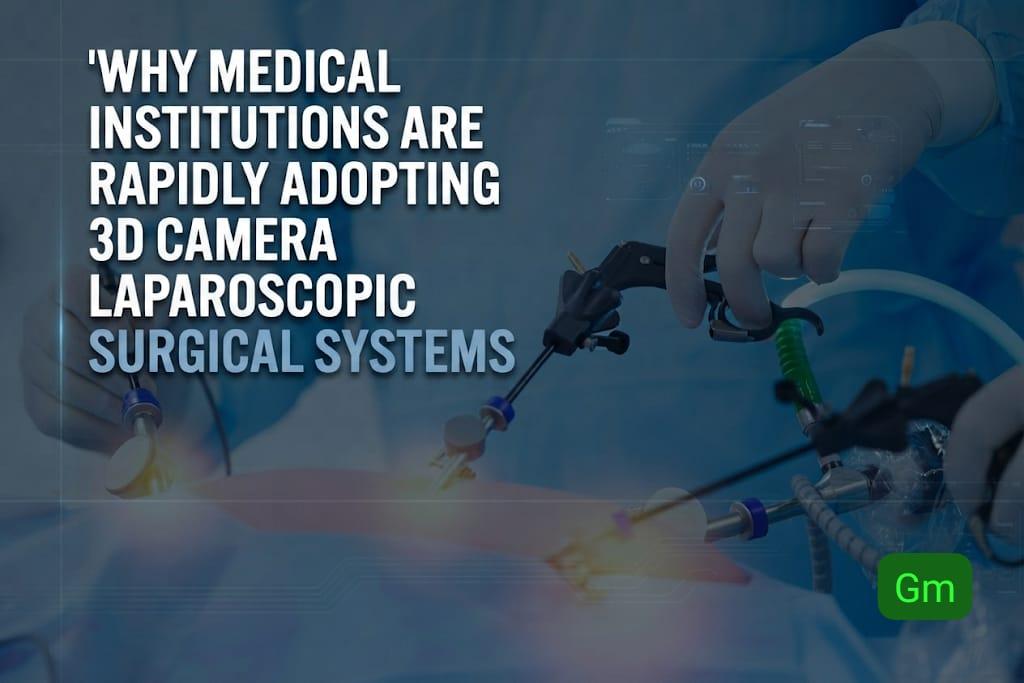
Read also : Why Medical Institutions Are Rapidly Adopting 3D Camera Laparoscopic Surgical Systems
The future promises even more exciting developments. Augmented reality systems are beginning to overlay navigation information directly onto the surgeon's view, eliminating the need to look away at separate monitors. Artificial intelligence is being integrated to provide predictive guidance and automatically identify critical structures. Some systems are already incorporating machine learning to compensate for tissue deformation in real-time.

What we're witnessing is nothing less than a fundamental transformation in how surgery is performed. Just as GPS navigation became indispensable for driving, 3D surgical navigation is rapidly becoming essential for many complex procedures. The technology represents a perfect fusion of human expertise and digital precision amplifying what surgeons do best while compensating for human limitations.
The statistics speak for themselves: 11-fold improvements in accuracy, dramatic reductions in complications, and faster recovery times for patients. As this technology continues to evolve and become more accessible, we can expect even more dramatic improvements in surgical outcomes.
For patients facing complex surgery, the message is clear: ask whether 3D navigation will be used in your procedure. This technology represents one of the most significant advances in surgical safety and precision in decades. While it may not be appropriate for every procedure, when it is indicated, the benefits can be life-changing.
The human body's complexity has always challenged surgeons, but now they have a powerful new ally. With 3D navigation systems serving as their digital co-pilot, surgeons can navigate the body's intricate pathways with unprecedented confidence and precision. The future of surgery isn't just about smaller incisions or faster recovery it's about fundamentally reimagining what's possible when human skill meets digital intelligence.
Leading the way in health excellence through innovation, expertise, care and support.