1 year ago


Posted 1 year ago 566 views 12 mins read
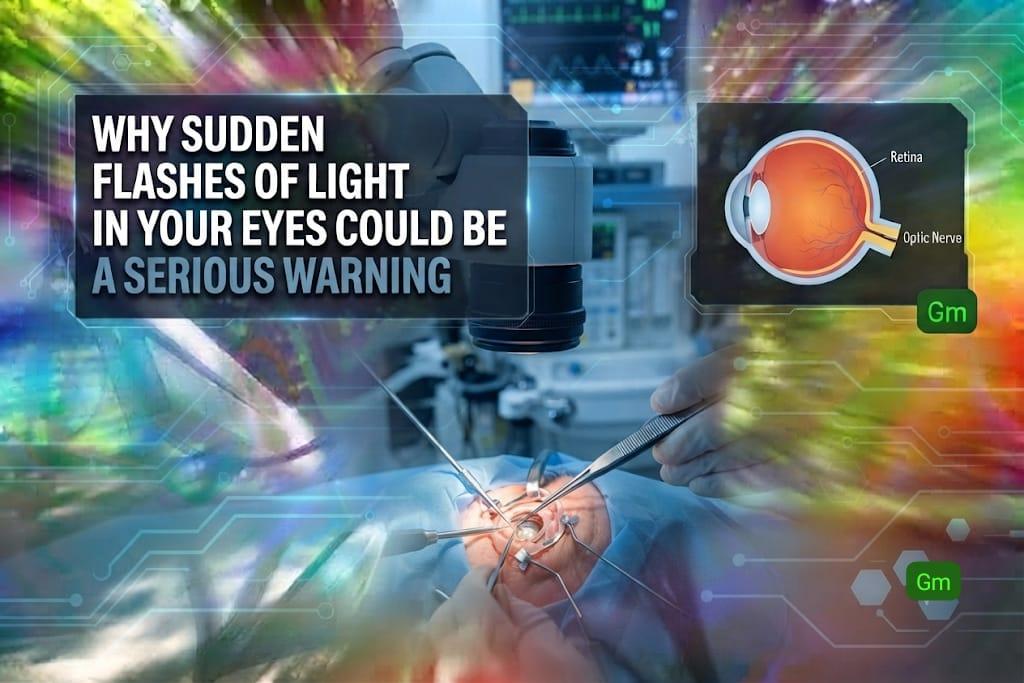
The annual international incidence of rhegmatogenous retinal detachment is 12.17 per 100,000 population and it's increasing every year. What makes this statistic particularly alarming is that most people dismiss the early warning signs, including sudden flashes of light, as nothing more than tired eyes or stress. I've seen too many patients walk into my office days or weeks after first experiencing these symptoms, only to discover they've been living with a ticking time bomb that could steal their vision permanently. Here's the brutal truth about eye flashes that most people don't realize: they're not just annoying visual disturbances you can ignore. When your eye starts producing its own lightning show, it's often your retina's desperate cry for help! The difference between acting immediately and waiting "to see if it gets better" can literally be the difference between preserving your sight and facing irreversible vision loss. The medical term is photopsia, but what matters isn't the name it's understanding when these flashes signal an emergency that requires immediate medical attention.
When you see flashes of light that aren't actually there, your retina is being mechanically stimulated. Think of it as your eye's equivalent of seeing stars after being hit in the head. According to Cleveland Clinic most common causes of photopsias include migraine headaches, posterior vitreous detachment, and retinal tears or detachments.
But here's what's crucial to understand: not all flashes are created equal. The timing, frequency, and accompanying symptoms can mean the difference between a harmless migraine aura and a vision-threatening emergency.
Your retina is essentially the film inside your eye's camera. When the gel-like vitreous that fills your eye starts to shrink and pull away from the retina a process called posterior vitreous detachment it can create flashes. This happens to most people as they age and is usually harmless.

The problem arises when that pulling creates a tear. Once there's a hole in your retina, fluid can seep underneath and cause the retina to peel away like wallpaper coming off a wall. This is retinal detachment and it's a true medical emergency.
According to Mayo Clinic, you should seek immediate medical attention if you experience:
•Sudden appearance of numerous floaters those tiny specks or squiggly lines that drift through your vision
•Flashes of light in one or both eyes
•A curtain-like shadow over your field of vision
•Sudden reduction in side (peripheral) vision
The key word here is "sudden." Gradual changes might give you time to schedule a routine appointment, but sudden changes demand immediate action.
Medical literature consistently shows that patients with new symptomatic floaters, flashing lights, and visual field defects should be referred within 24 hours to an ophthalmologist. This isn't just a recommendation it's a critical timeline that can determine whether your vision can be saved.
I tell my patients: "When in doubt, don't wait it out." The risk of permanent vision loss far outweighs the inconvenience of an emergency eye exam that turns out to be unnecessary.
Research shows that retinal detachment is more common in people ages 40 to 70, with 59.25% of cases occurring in the 50-70 age group. However, don't let age create false security I've treated patients in their twenties with serious retinal problems.
Your risk increases significantly if you have:
•Extreme nearsightedness (high myopia)
•Previous retinal detachment in the other eye
•History of eye injury
•Family history of retinal detachment
 The Myopia Connection
If you're severely nearsighted, pay especially close attention to any visual changes. High myopia stretches the retina thinner, making it more prone to tears and detachment. Studies show that retinal detachments occur bilaterally in approximately 17% of patients under 30 years old, often related to high myopia.
Not every flash signals doom. Ocular migraines can cause spectacular light shows zigzag patterns, shimmering arcs, or flickering lights that typically last 10-30 minutes and may occur in both eyes. These usually have a distinctive pattern and resolve completely.
Retinal flashes are different. They're often described as:
•Brief, lightning-like streaks
•Usually seen in peripheral vision
•More noticeable in dark environments
•Often accompanied by new floaters
Here's a practical rule I give patients: If you can draw or describe a complex pattern to your flashes (like zigzags), it's probably migraine-related. If they're simple, brief streaks that you can't predict or control, treat them as an emergency.

Time is retinal tissue. Every hour that passes with an untreated retinal detachment allows more photoreceptors the cells that actually see to die from lack of oxygen and nutrients. The longer retinal detachment goes without treatment, the greater the risk of permanent vision loss. Eye emergency
Studies show that patients who receive treatment within 24 hours of symptom onset have significantly better visual outcomes than those who wait longer. This isn't a condition that gets better on its own or responds to home remedies.
Read also : Your Body's Silent Signals What It's SECRETLY Telling You About Your Health
I've had patients tell me, "I thought if I just rested my eyes, it would go away." The harsh reality is that retinal detachment is a mechanical problem that requires surgical intervention. No amount of rest, eye drops, or vitamins will reattach a detached retina.
The financial cost of delayed treatment is also sobering. Emergency retinal surgery is more complex, has higher complication rates, and often requires multiple procedures compared to early intervention.

If you experience sudden flashes, especially with new floaters or vision changes:
•Stop what you're doing and assess your symptoms
•Cover one eye, then the other to determine if symptoms are in one or both eyes
•Contact an ophthalmologist immediately don't wait for regular office hours
•Avoid jarring activities that might worsen a potential tear
•Don't drive if you're experiencing significant visual disturbances
Read also : 8 Strange Signs Your Body is Begging for Vitamin B12
Not all emergency rooms are equipped to handle retinal emergencies effectively. Many will refer you to an ophthalmologist anyway, wasting precious time. Instead:
•Call your eye doctor's emergency line
•Go to a hospital with ophthalmology residents on call
•Contact a retinal specialist directly if you have access to one
After years of treating patients with retinal conditions, I can say with absolute certainty that the patients who do best are those who take visual symptoms seriously from the beginning. The lifetime risk of retinal detachment is 3% by age 85 not insignificant odds when the stakes are your vision.
Yes, most flashes turn out to be harmless. But the consequences of missing a true retinal emergency are simply too severe to gamble with. I'd rather examine a hundred patients with benign symptoms than miss one patient whose vision could have been saved with immediate treatment.
Your eyes don't get a second chance. When they're sending you warning signals in the form of flashes and floaters, listen to them. The few hours you spend in an emergency eye exam could save you a lifetime of vision loss.



Leading the way in health excellence through innovation, expertise, care and support.