
Overview
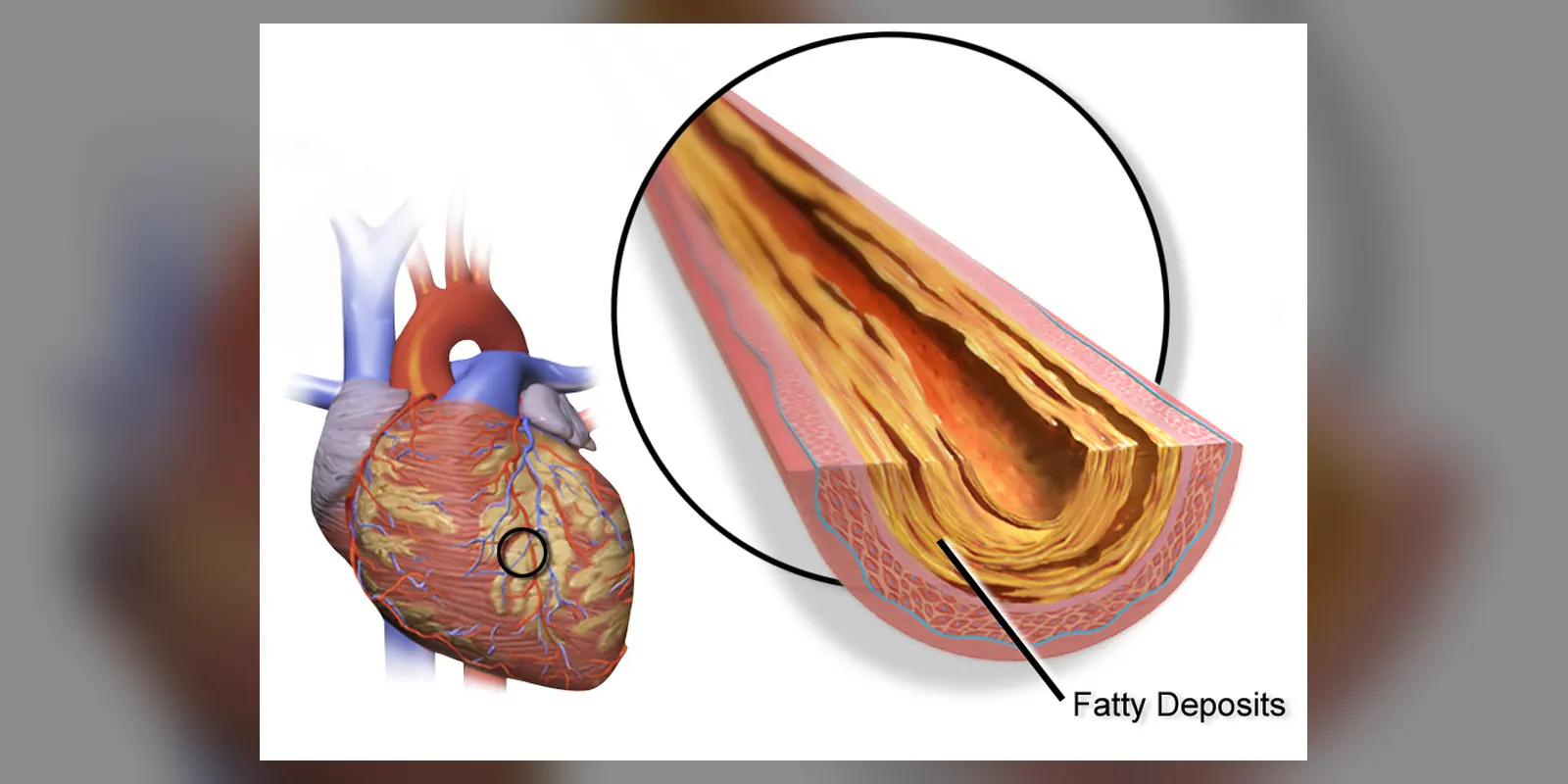
Atherosclerosis is a long-term condition in which fatty deposits called plaques build up inside the walls of arteries. Over time, plaques narrow and stiffen the arteries, reducing blood flow to organs. If a plaque ruptures, a blood clot can form on it and suddenly block the artery.
Atherosclerosis is the underlying cause of most heart attacks, strokes and peripheral arterial disease, and it is the leading cause of death worldwide. It develops silently over decades, often starting in childhood or young adulthood, and usually causes no symptoms until an artery is seriously narrowed or blocked. The good news is that it is largely preventable: not smoking, eating healthily, staying active and controlling blood pressure, cholesterol and diabetes all slow or stop its progression.
When to get urgent help
Call emergency services for chest pain lasting more than a few minutes, sudden weakness or numbness of the face, arm or leg, speech difficulty, sudden vision loss, or a cold, painful, pale leg.
Causes and risk factors
- High LDL cholesterol and high lipoprotein(a)
- High blood pressure
- Smoking
- Diabetes and insulin resistance
- Obesity, especially abdominal fat
- Physical inactivity
- Unhealthy diet: high in saturated fat, salt and processed foods
- Older age and male sex
- Family history of early heart disease
- Chronic kidney disease
- Chronic inflammatory conditions, such as rheumatoid arthritis, psoriasis and HIV
- Air pollution
How it develops (pathophysiology)
Normal artery wall
Arteries have three layers: the intima (inner lining), the media (muscle) and the adventitia (outer layer). The intima is lined by endothelial cells, which keep the inner surface smooth, release nitric oxide to relax the artery, prevent clotting and control which substances pass into the wall.
What goes wrong
Atherosclerosis is now understood as both a lipid-driven and an inflammatory disease:
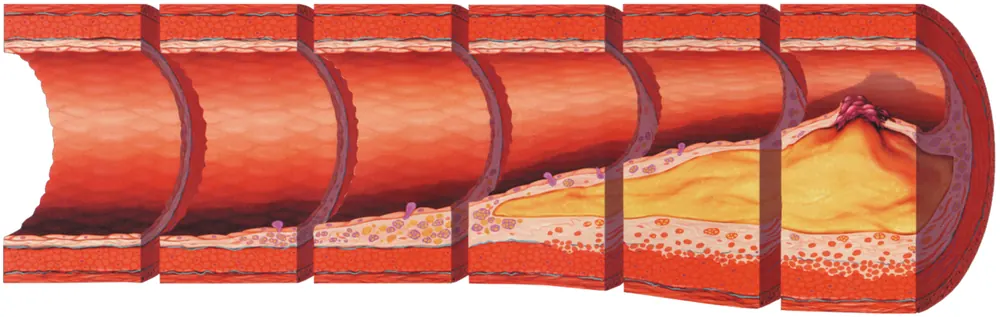
- Endothelial dysfunction: high blood pressure, smoking, high blood sugar, high cholesterol and disturbed blood flow at branch points damage the endothelium. It becomes leaky and starts expressing adhesion molecules.
- LDL entry and modification: LDL cholesterol particles pass into the intima and become trapped and oxidised.
- Monocyte recruitment: oxidised LDL triggers inflammation. Monocytes from the blood stick to the endothelium, enter the wall and become macrophages.
- Foam cells: macrophages engulf oxidised LDL through scavenger receptors and fill with fat, becoming foam cells. Clusters of foam cells form fatty streaks, the earliest lesions, which can appear in adolescence.
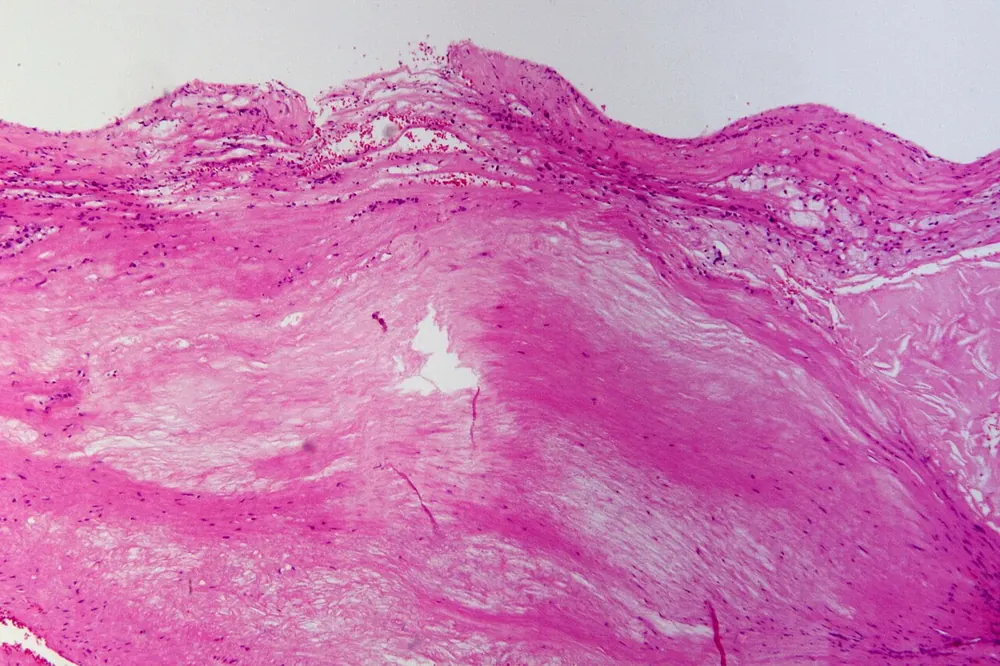
- Plaque growth: foam cells release inflammatory cytokines and die, forming a necrotic core of fat and cell debris. Smooth muscle cells migrate from the media into the intima, multiply and produce collagen, forming a fibrous cap over the core.
- Calcification and remodelling: plaques may calcify. Initially, arteries enlarge outward to preserve blood flow (positive remodelling), but eventually plaques narrow the lumen.
Stable and vulnerable plaques
- Stable plaques have thick fibrous caps and small lipid cores. They slowly narrow arteries, causing symptoms such as angina when blood demand rises.
- Vulnerable plaques have thin caps, large lipid cores and many inflammatory cells. Macrophages release enzymes (matrix metalloproteinases) that weaken the cap. These plaques can rupture or erode, exposing the core to blood and triggering a thrombus (clot), which can suddenly block the artery.
Why the symptoms happen
Atherosclerosis causes symptoms only when blood flow is restricted:
- Coronary arteries: angina (chest pain on exertion) or heart attack
- Carotid and brain arteries: transient ischaemic attacks or stroke
- Leg arteries: calf pain when walking (claudication), cold feet, ulcers
- Kidney arteries: high blood pressure and kidney damage
- Gut arteries: abdominal pain after eating
- Aorta: aneurysms
How treatment acts on the mechanism
Statins lower LDL cholesterol, reduce inflammation and stabilise plaques. Ezetimibe, PCSK9 inhibitors and inclisiran lower LDL further. Blood pressure control reduces endothelial damage. Antiplatelet medicines such as aspirin reduce clot formation on plaques. Stopping smoking improves endothelial function rapidly. Angioplasty, stents and bypass surgery restore blood flow through severely narrowed arteries.
Types
Atherosclerosis can affect arteries throughout the body, leading to:
- Coronary artery disease
- Cerebrovascular disease (stroke, TIA)
- Peripheral arterial disease
- Renal artery stenosis
- Mesenteric ischaemia
- Aortic aneurysm
Signs and symptoms
Usually no symptoms until advanced. Then, depending on the arteries affected:
- Chest pain or tightness on exertion
- Breathlessness
- Sudden weakness, numbness, facial drooping, speech problems (stroke)
- Pain in the calves, thighs or buttocks when walking that eases with rest
- Cold or pale feet, slow-healing wounds
- Erectile dysfunction
- Abdominal pain after meals and weight loss
How it is diagnosed
- Cardiovascular risk assessment using tools such as QRISK or SCORE2
- Blood tests: cholesterol (lipid profile), lipoprotein(a), glucose or HbA1c, kidney function
- Blood pressure
- ECG and stress tests for heart symptoms
- CT coronary angiography and coronary calcium score
- Carotid ultrasound
- Ankle-brachial pressure index for leg arteries
- Angiography
Possible complications
- Heart attack
- Stroke and transient ischaemic attack
- Heart failure
- Peripheral arterial disease and amputation
- Aortic aneurysm and rupture
- Kidney disease
- Vascular dementia
- Sudden cardiac death
Goals of treatment
Treatment aims to slow or stop plaque growth, stabilise existing plaques, prevent clots, relieve symptoms and reduce the risk of heart attack and stroke.
Medicines
- Statins (such as atorvastatin)
- Ezetimibe, PCSK9 inhibitors or inclisiran to lower LDL further
- Antiplatelets: aspirin or clopidogrel for people with established disease
- Blood pressure medicines
- Diabetes medicines, including SGLT2 inhibitors or GLP-1 receptor agonists with cardiovascular benefit
- Low-dose colchicine in some people with coronary disease to reduce inflammation
Other treatments
- Lifestyle changes: stopping smoking, healthy diet, regular exercise, weight loss
- Angioplasty and stenting
- Bypass surgery (coronary or leg arteries)
- Carotid endarterectomy or stenting
- Cardiac rehabilitation and supervised exercise for claudication
Living with it and prevention
- Do not smoke
- Eat a diet rich in vegetables, fruit, whole grains, legumes, nuts and oily fish, and low in saturated fat, salt and processed foods
- Be physically active for at least 150 minutes a week
- Maintain a healthy weight
- Limit alcohol
- Have blood pressure, cholesterol and blood sugar checked regularly
- Take medicines as prescribed
Monitoring and follow-up
People at high risk or with established atherosclerosis need regular reviews of blood pressure, cholesterol, diabetes control and symptoms. Treatment targets for LDL cholesterol are set according to risk.
Outlook
Atherosclerosis is very common, but its progression can be slowed or halted with treatment and lifestyle changes, greatly reducing the risk of heart attacks and strokes.
Special considerations
- Young people with very high cholesterol: may have familial hypercholesterolaemia and need family screening
- Women: risk increases after menopause; symptoms may differ
- People with diabetes or kidney disease: at very high risk