1 year ago


Posted 1 year ago 1251 views 10 mins read
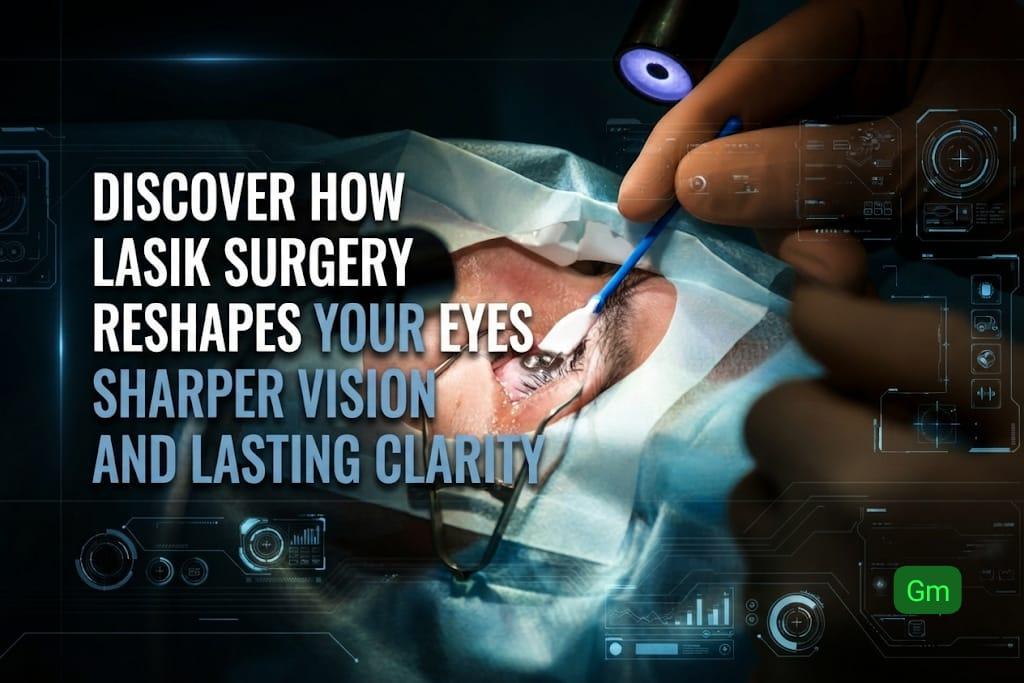
Over 95% of LASIK patients achieve 20/20 vision or better making it one of the most successful elective procedures in modern medicine. Yet despite these remarkable success rates, many people still wonder exactly how a few pulses of laser light can transform blurry vision into crystal-clear sight that lasts for decades. As someone who has guided countless patients through this life-changing procedure, I can tell you that understanding the science behind LASIK makes the decision much easier! The technology is nothing short of extraordinary. We're talking about a laser so precise it can remove tissue in increments of just 0.25 microns that's roughly 1/200th the thickness of a human hair. This incredible precision allows surgeons to reshape your cornea with mathematical accuracy, correcting vision problems that have plagued you for years in just minutes. What truly amazes me after years in this field is how LASIK has evolved from an experimental procedure to a routine surgery with satisfaction rates of 95.4% and complication rates below 1%. The question isn't whether LASIK works it's whether you're ready to experience the freedom it offers.
Think of your eye as nature's most sophisticated camera. The cornea that clear, dome-shaped tissue at the front of your eye serves as the primary lens, responsible for roughly 65% of your eye's focusing power. When this cornea has an irregular shape, it bends light incorrectly, causing the blurry vision associated with nearsightedness, farsightedness, and astigmatism.
According to Mayo Clinic , in eyes with normal vision, the cornea bends light precisely onto the retina at the back of the eye. But when the cornea is too steep, too flat, or irregularly curved, light focuses either in front of or behind the retina, creating that frustrating blur you've been living with.

The heart of LASIK is the excimer laser a marvel of modern engineering that uses ultraviolet light to break molecular bonds in corneal tissue. This isn't heat-based removal like other lasers; instead, it's called "photoablation" a cold process that vaporizes tissue at the cellular level without damaging surrounding areas.
The precision is staggering. Each pulse removes exactly 0.25 microns of tissue so accurate that surgeons can reshape your cornea to within microscopic tolerances. To put this in perspective, if your cornea were the size of a football field, the laser could accurately trim grass down to individual blades!
LASIK combines two distinct technologies to achieve its remarkable results. First, either a microkeratome blade or a femtosecond laser creates a thin flap in the cornea's surface typically about 80-100 microns thick. This flap is gently lifted, exposing the corneal tissue underneath.
The second step involves the excimer laser reshaping the exposed corneal bed based on your specific prescription. For nearsightedness, the laser flattens the central cornea. For farsightedness, it steepens the center. For astigmatism, it smooths out irregular curves to create a more spherical surface.
According to Cleveland Clinic , this reshaping allows light to enter your cornea properly and take the correct path to your retina. The flap is then repositioned and adheres naturally without stitches nature's own bandage that promotes rapid healing.

What makes LASIK so effective is its basis in precise optical calculations. Your surgeon uses advanced wavefront technology to create a detailed topographic map of your cornea similar to the way GPS satellites map Earth's terrain. This map shows exactly where and how much tissue needs to be removed to correct your specific vision problems.
Modern LASIK systems can remove approximately 14-16 microns of corneal tissue per diopter of correction needed. Since the average cornea is about 520 microns thick, there's plenty of tissue to work with while maintaining structural integrity.
The actual LASIK procedure is remarkably quick typically completed in 30 minutes or less for both eyes. You'll lie back in a reclining chair while numbing drops ensure complete comfort. A small suction ring holds your eye steady, and you'll be asked to focus on a blinking light while the laser does its precise work.

Many patients are surprised by certain sensations during surgery. You might notice a distinct odor as the laser removes tissue some describe it as similar to burning hair. This is completely normal and indicates the laser is working properly. The entire reshaping process typically takes less than 60 seconds per eye.
The beauty of LASIK lies not just in its effectiveness but in its rapid recovery. Most patients notice improved vision within hours of surgery, though your eyes need 2-3 months to heal completely and vision to stabilize fully.
According to recent studies, 99% of patients achieve better than 20/40 vision, and more than 90% achieve 20/20 or better. These aren't just numbers – they represent people who wake up each morning seeing their alarm clocks clearly, who can swim without prescription goggles, and who experience the world with newfound visual freedom.
One of the most common questions I receive is: "How long will my LASIK results last?" The answer is encouraging. LASIK permanently reshapes your cornea, and for most people, this correction remains stable for decades. Studies tracking patients for over 10 years show that the vast majority maintain their improved vision.
However, it's important to understand that LASIK doesn't stop the natural aging process of your eyes. Around age 40, you'll likely develop presbyopia the need for reading glasses regardless of whether you've had LASIK. This is simply part of normal aging and affects everyone.

The numbers speak volumes about LASIK's success. Research involving over 82,000 eyes found an average satisfaction rate of 92.6%, with 97.5% of patients recommending LASIK to friends and family. When you consider that serious complications occur in only 0.3% of cases, the risk-benefit ratio becomes compelling.
What's particularly impressive is that these satisfaction rates have remained consistently high across different studies and time periods, suggesting that LASIK delivers lasting benefits that patients truly value.
Read also : Your Body's Silent Signals What It's SECRETLY Telling You About Your Health
Not everyone is suitable for LASIK, and proper screening is crucial. Ideal candidates typically have:
•Stable vision for at least one year
•Corneal thickness of at least 460-480 microns
•Realistic expectations about outcomes
•No active eye diseases or autoimmune conditions
Your age also matters, but perhaps not in the way you think. While LASIK is FDA-approved for ages 18 and older, many surgeons prefer to wait until patients are in their mid-twenties when vision has fully stabilized.
Read also: Why Sudden Flashes of Light in Your Eyes Could Be a Serious Warning
Today's LASIK technology represents decades of refinement and innovation. Wavefront-guided treatments create personalized corrections based on your eye's unique characteristics. Eye-tracking systems ensure the laser follows your eye's natural movements. Advanced algorithms optimize treatment patterns for better night vision and reduced side effects.
These technological advances have dramatically improved outcomes while reducing complications, making modern LASIK safer and more effective than ever before.
The benefits of LASIK extend far beyond simply seeing more clearly. Patients consistently report improved quality of life, increased self-confidence, and freedom from the daily hassles of glasses and contacts. Athletes perform better without worrying about losing contacts or broken glasses. Parents can see their children clearly during water activities. Professionals feel more confident in important meetings.
The economic benefits are substantial too. While LASIK requires an upfront investment, it typically pays for itself within a few years when you consider the ongoing costs of glasses, contacts, and solutions.
As we advance further into 2024 and beyond, LASIK continues to evolve. Emerging technologies like smart laser systems and artificial intelligence-guided treatments promise even better outcomes with reduced side effects. The future of vision correction has never looked brighter literally and figuratively.
If you've been considering LASIK, the evidence overwhelmingly supports its safety, effectiveness, and patient satisfaction. The question isn't whether LASIK can improve your vision it's whether you're ready to take the next step toward visual freedom.
Leading the way in health excellence through innovation, expertise, care and support.